Veteran’s & Depression
People often only associate veterans with Post Traumatic Stress Disorder (PTSD), but veterans can suffer from a wide range of mental health disorders including depression. Veterans often face unique challenges that most civilians cannot comprehend. Some challenges may include combat exposure, traumatic experiences, multiple deployments, physical injuries, and the transition back into civilian life. Often, that transition back home is where they find themselves struggling the most. It is important to recognize that not all the scars and wounds they face are physical. When discussing veterans and depression, a common link is the feeling of grief and guilt. From the separation of their loved ones, losing friends or members of their team, and constantly putting oneself in danger, it is only understandable that they may struggle with depression when returning home.
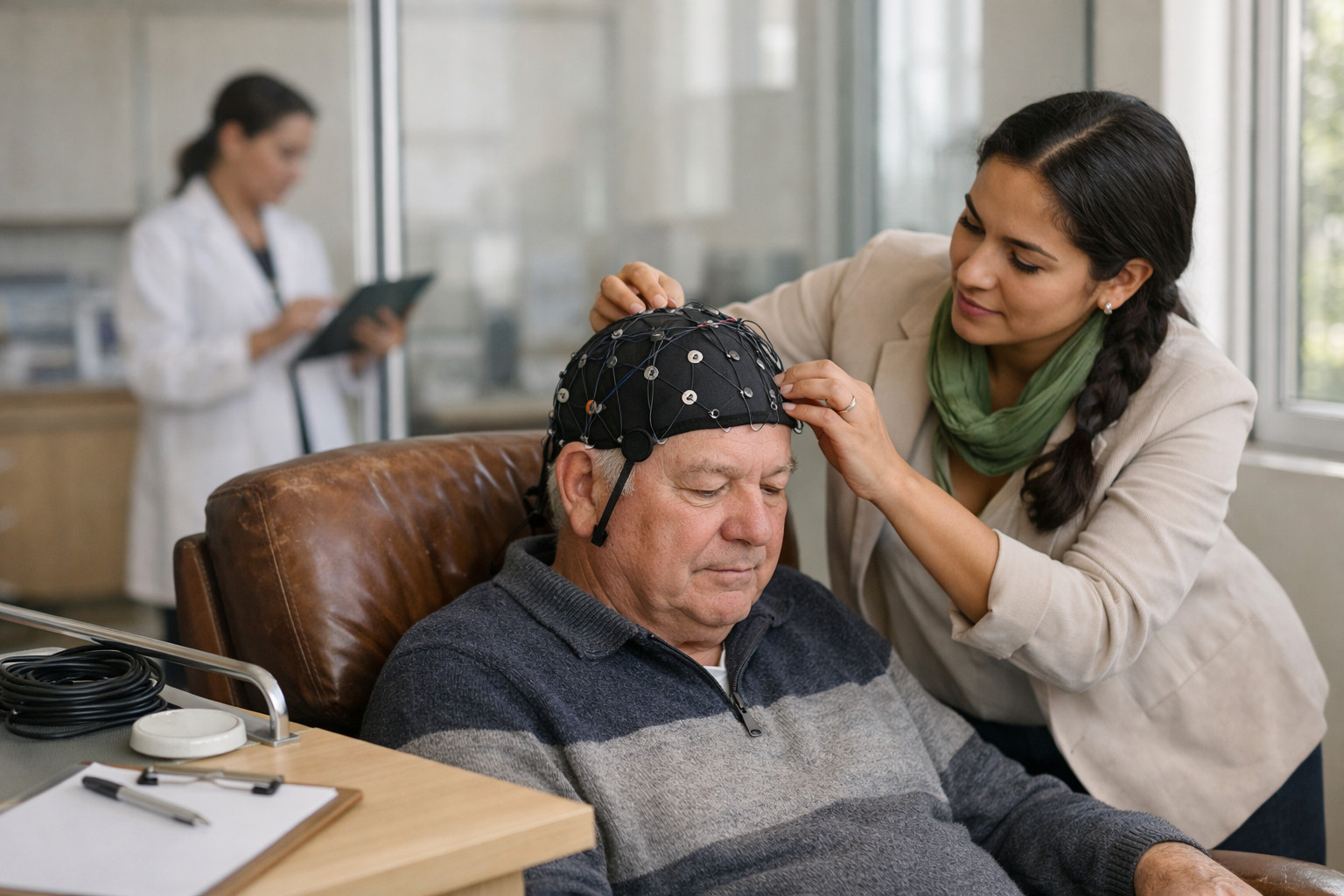
Depression manifests through a wide range of symptoms such as persistent sadness, feelings of worthlessness or guilt, loss of interest or pleasure, fatigue, difficulty concentrating, and loss of interest in activities. To be diagnosed with depression these symptoms must cause significant distress or impairment in social, occupational, or other areas of functioning. Unfortunately, in 2016 suicide rates for veterans were 1.5 times greater than non-veterans. Veterans are also at a higher risk of suicide during their first year after returning home, making it crucial to begin treatment when symptoms first appear. There are many treatments that can specifically help veterans who suffer from depression and other mental health illnesses including trauma-focused therapies, counseling services, psychotherapy, and medication. However, in recent years the use of technology and brain stimulation has become more recognized in the treatment plan for depression. MeRT (Magnetic eResonance Therapy) is a form of brain stimulation that helps the parts of the brain that are not communicating as they should. A brain that is functioning optimally can lead to dramatic improvements and learning in all the traditional forms of therapy for depression in veterans. Research on MeRT and depression can be found here.
There are thousands of stories of veterans who suffered from depression and had taken their own lives. Asking for help is not a weakness, it takes strength and bravery to admit that you are struggling.
The World Health Organization estimates that over 264 million people face depression worldwide, it is important to remind ourselves that we are not alone.
The story of Mickey Keeney showcases just how difficult it can be for veterans. Mickey Keeney served for 8 years and evidently left due to medical issues. Keeney was in constant pain due to an injury suffered to his knees and back, was struggling with his divorce and a new marriage, and unfortunately knew that his son, who was also in the military, attempted suicide and suffered from PTSD. Keeney was struggling with both anxiety and depression; he did reach out for help and started medication, but unfortunately lost his battle. At the age of forty-two, on the evening of April 15th, Keeney pulled the trigger that ended his life leaving his family behind.
LTC Robert Zaza served as an Army Space Support Team Leader and as a G-13 Section Chief for the US Army Space and Missile Defense command. Zaza had been living in New Mexico with his wife and two children when he committed suicide in their bathroom on March 17, 2019. His wife had tried everything she could to stop him in that bathroom, but unfortunately, she was unsuccessful. Robert had suffered from both depression and PTSD after serving in the military. His wife believed that the main trigger was after forming a friendship with a 12-year-old boy for a mission. One day when Robert returned to the village, he found that 12-year-old strung up in a tree and killed by the Taliban. Whether serving in the military or not, experiencing that kind of trauma would negatively affect anyone. Robert not only had to experience this traumatic event but who knows how many others.
Bringing awareness to stories like Mickey Keeney’s and Robert Zaza is important to demonstrate the effect service has on a person’s mental health. These veterans are putting their lives in danger to protect our country every day, the least we can do is help to build a stable environment for them when they return home. Unfortunately, we cannot take away their experiences or make them forget, but we can help them to understand that it was not their fault and that there is a healthy way to grieve and move on. Depression and/or other mental health issues are evident in almost every veteran; we should be providing not just financial help, but mental health services that can decrease the number of suicides we see by veterans each day.