Modern brain health care increasingly relies on data. Rather than treating every brain the same way, clinicians can now look at how an individual’s brain is actually functioning and use that information to guide care. One of the key tools that makes this possible is qEEG brain mapping. If you have heard the term and wondered what it means, this guide explains what qEEG is, how it works, and why it matters.
At Brain Performance Technologies, brain mapping is a foundation of our personalized approach. Understanding it can help you make sense of data-guided treatments and what they offer.
What Is qEEG Brain Mapping?
qEEG stands for quantitative electroencephalography. A standard EEG records the brain’s electrical activity using sensors placed on the scalp. A qEEG takes that recording a step further: it applies quantitative analysis to the data, comparing your brain’s activity to reference patterns and translating the results into detailed maps.
The result is often called a brain map. It visually represents how different regions of your brain are functioning, including which areas may be over-active, under-active, or out of sync with one another. In short, qEEG turns raw brainwave data into an organized, interpretable picture of brain function.
How Does qEEG Work?
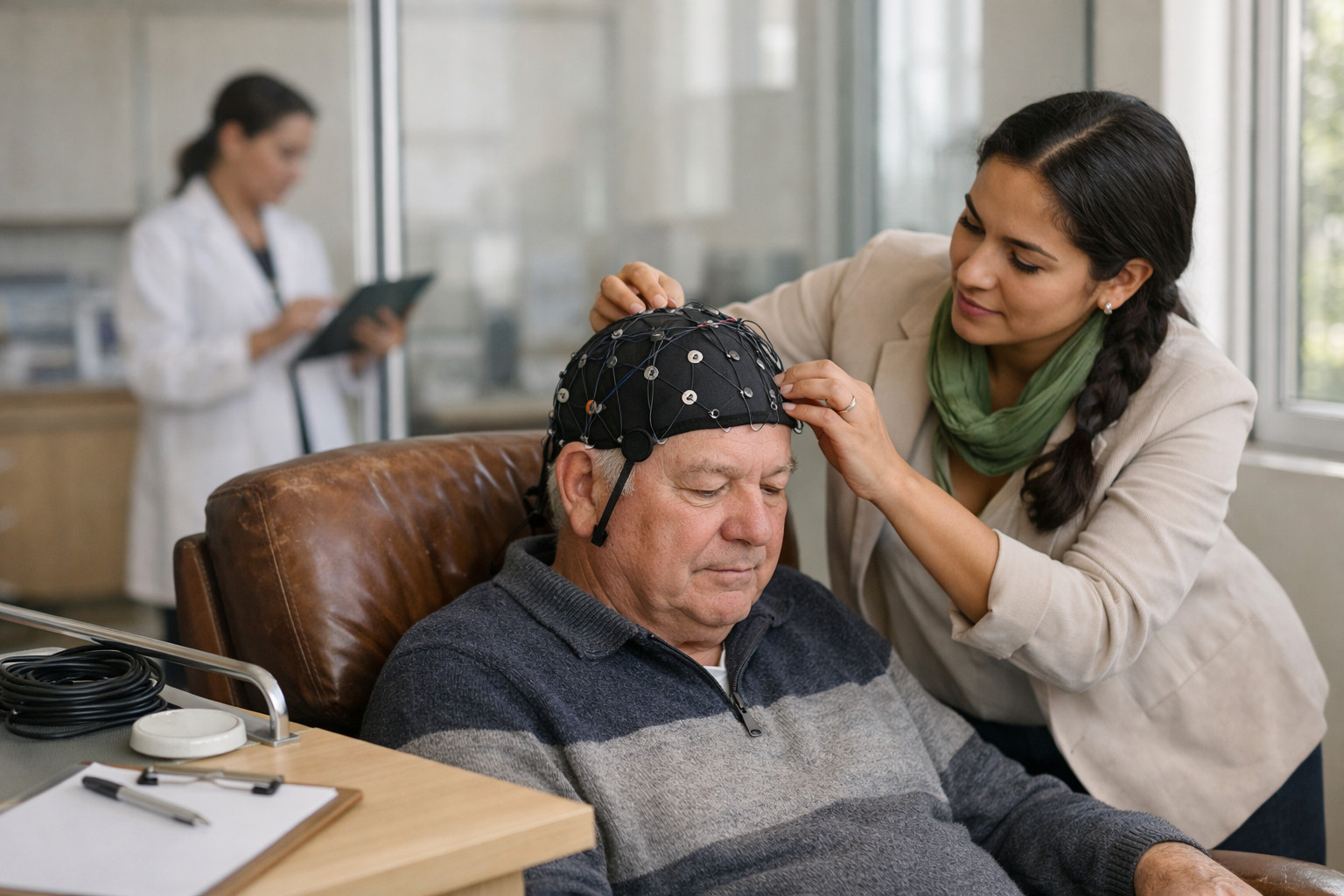
The process is non-invasive and comfortable. A cap fitted with sensors is placed on your scalp to record electrical activity, usually while you are at rest with your eyes open and closed. Nothing is injected, and no radiation is involved; the sensors simply read the natural electrical signals your brain is already producing.
That recorded activity is then analyzed. The brain produces different types of brainwaves, each associated with different states and functions, and qEEG measures the strength, location, and coordination of these waves. The analysis highlights patterns that stand out, creating the map that clinicians use to inform care. Our overview of how brain wave therapy enhances cognitive function explains more about why these brainwave patterns matter.
Why Does qEEG Matter?
The value of qEEG is that it adds objective, individualized data to the picture. Traditional assessments of brain-related conditions often rely heavily on symptoms and questionnaires, which are essential but subjective. qEEG complements those tools by providing a window into the underlying brain activity itself.
This matters for a few reasons:
- Personalization. A brain map allows care to be tailored to an individual’s specific patterns rather than applying a one-size-fits-all approach.
- A clearer starting point. Mapping establishes a baseline of how the brain is functioning before treatment begins.
- Tracking change. Repeating the qEEG over time lets clinicians see how brain activity is shifting and adjust the plan accordingly.
It is worth noting that qEEG is a tool to inform care, not a standalone diagnosis. It works best as part of a comprehensive evaluation alongside clinical history and other assessments, interpreted by a qualified professional.
qEEG and Personalized Brain Treatments
qEEG is central to data-guided treatments because it provides the information needed to personalize them. Approaches like MeRT (Magnetic e-Resonance Therapy) use qEEG to map the brain and then tailor magnetic stimulation to the individual’s patterns, with the goal of encouraging healthier, more organized brain activity.
This is the difference between a generic protocol and an individualized one. Instead of assuming every brain with a given concern should be treated identically, qEEG-guided care starts from the specific reality of your brain. Our overview of the benefits of MeRT treatment shows how this personalization plays out, and our look at MeRT treatment for autism illustrates how brain mapping informs care for specific populations.
The Brainwave Patterns qEEG Measures
To understand what a brain map shows, it helps to know that the brain produces several types of brainwaves, each associated with different states. Slower waves are generally linked to rest, drowsiness, and deep relaxation, while faster waves are associated with active thinking, focus, and alertness. A healthy, well-regulated brain tends to produce the right kinds of waves, in the right places, at the right times.
qEEG measures the strength and distribution of these different brainwaves across the regions of the brain, as well as how well those regions coordinate with one another. When certain waves are excessive or deficient in particular areas, or when regions are poorly synchronized, the brain map can reveal it. This is the information that allows clinicians to move from general impressions to a more specific, individualized understanding of how a person’s brain is functioning.
How qEEG Differs From Other Brain Scans
People sometimes confuse qEEG with imaging scans like MRI or CT. The difference is fundamental. MRI and CT capture the brain’s structure, essentially its anatomy, showing what the brain looks like physically. qEEG, by contrast, captures the brain’s function, measuring its electrical activity in real time to show how it is working.
Both kinds of information can be valuable, but they answer different questions. Structural imaging is well suited to identifying physical abnormalities, while qEEG is suited to understanding patterns of activity and communication. For personalized, activity-guided treatments, it is the functional picture that qEEG provides which makes individualized care possible. This is why qEEG has become so central to data-informed approaches to brain health.
What to Expect During a qEEG
If you have a qEEG scheduled, knowing the process can put you at ease. You will sit comfortably while a sensor cap is placed on your head. The recording itself is painless and typically takes a relatively short time. You may be asked to keep your eyes open for part of it and closed for another part, and to stay relaxed and still so the recording is clean.
There is no recovery time and no side effects from the recording itself, since it only reads your brain’s existing activity. Afterward, the data is analyzed and turned into a brain map that a clinician reviews with you and uses to inform recommendations.
Understanding Your Brain Map
A brain map can look striking, often using colors to represent different levels of activity across regions. While the visual is compelling, the real value lies in the interpretation. A trained clinician examines the patterns, considers them alongside your symptoms and history, and translates the findings into meaningful insights and, where appropriate, a personalized plan.
It is important to approach brain maps with balanced expectations. They are a powerful source of objective information, but they are one piece of the puzzle. The most useful interpretation always combines the data with the full clinical picture rather than relying on the map alone.
qEEG in Mental Health and Cognitive Care
Because qEEG reveals patterns of brain activity, it has become a useful tool across a range of brain health concerns. Clinicians may use brain mapping to better understand conditions affecting attention, mood, and cognition, always as one input among several rather than a definitive answer on its own. The goal is not to replace clinical judgment but to enrich it with objective, individualized data that can sharpen both assessment and treatment planning.
This is particularly valuable when a one-size-fits-all approach has not produced the results a person hoped for. By revealing the specific patterns underlying an individual’s experience, qEEG can help guide a more targeted approach. As with every tool discussed here, its usefulness depends on being interpreted thoughtfully by professionals who understand both the technology and the person in front of them.
The Bigger Picture
qEEG brain mapping reflects a broader shift in brain health toward more personalized, data-informed care. By making the brain’s activity visible and measurable, qEEG helps move beyond guesswork and toward approaches tailored to the individual. It establishes a baseline, guides personalized treatment, and allows progress to be tracked objectively over time.
That said, technology is only as good as the expertise behind it. The value of qEEG depends on careful recording, sound analysis, and thoughtful interpretation by qualified professionals who understand both the data and the person it represents.
Take the Next Step
If you are exploring personalized, data-guided approaches to brain health, understanding qEEG brain mapping is a helpful starting point. It is the foundation that allows treatment to be tailored to your unique brain rather than a generic protocol.
To learn whether qEEG-guided care might be right for you, reach out to the team at Brain Performance Technologies for a personalized evaluation.
Frequently Asked Questions
Is qEEG brain mapping safe? Yes. qEEG is non-invasive and painless. It only records the electrical activity your brain is already producing, with no injections or radiation involved.
What does a qEEG show? It shows how different regions of your brain are functioning, including areas that may be over-active, under-active, or poorly coordinated, presented as a brain map.
Is qEEG a diagnosis? No. qEEG is a tool that informs care and is best used as part of a comprehensive evaluation interpreted by a qualified professional, not as a standalone diagnosis.
How is qEEG used in treatment? It provides the individualized data needed to personalize treatments like MeRT, establish a baseline, and track changes over time.
This article is for educational purposes and is not a substitute for personalized medical advice. Always consult a qualified healthcare provider about your specific situation.