Your First TMS Session: What to Expect
Starting any new treatment can feel intimidating, especially one that involves the brain. If you have scheduled transcranial magnetic stimulation, or TMS, you probably have practical questions: Will it hurt? What will I feel? How long does it take? Can I drive home? Knowing what to expect from your first TMS session turns uncertainty into confidence, and the reality is far more ordinary and comfortable than many people imagine.
This guide walks through the entire experience, from the steps before your first appointment to the session itself and the days that follow. It is educational and is not medical advice. Your own care should always be guided by the clinicians treating you.
A Brief Refresher on TMS
TMS uses focused magnetic pulses to stimulate specific regions of the brain involved in mood regulation. It is non-invasive, requires no anesthesia, and does not involve any sedation, so you stay fully awake and alert throughout. It is FDA-cleared for major depressive disorder and for obsessive compulsive disorder, and accelerated protocols such as SAINT have expanded what treatment can look like. Our overview of TMS technology and our page on SAINT explain these in more detail.
Because TMS does not rely on medication circulating through your body, it avoids many of the systemic side effects people associate with antidepressants. Our article comparing TMS to traditional treatments puts these differences in context.
Before Your First Session
Your first treatment is not actually the first step. A few things usually happen first:
- Consultation. A clinician reviews your history, symptoms, prior treatments, and goals to confirm TMS is appropriate and safe for you. This is also when you can ask questions.
- Screening for safety. Because TMS uses magnetic fields, the team will ask about any implanted metallic or electronic devices, seizure history, and current medications. This screening protects you.
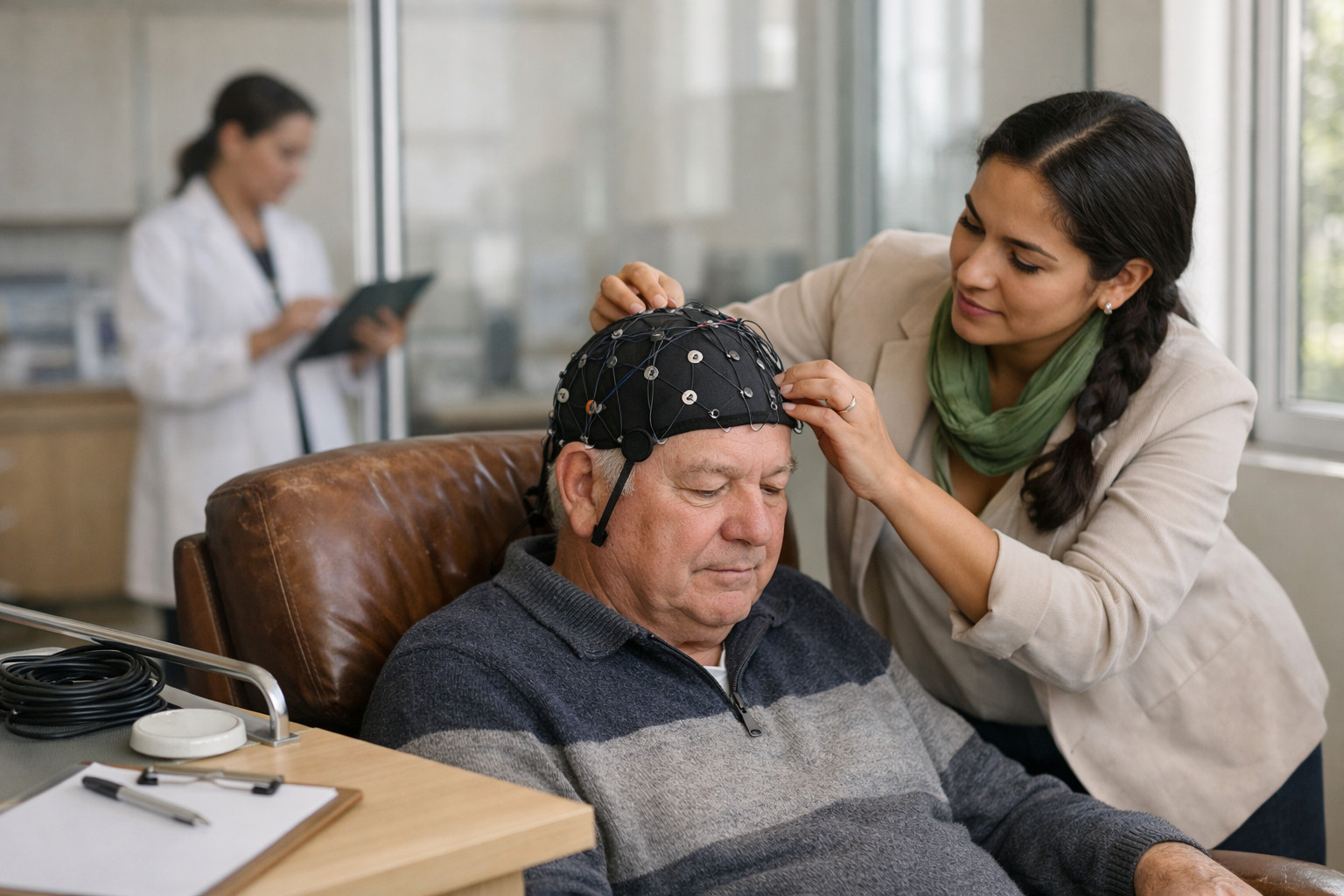
- Brain mapping, where used. At clinics that personalize treatment, a QEEG may be performed to inform planning. Our explainer on QEEG brain mapping describes what that involves.
- Motor threshold determination. At your first treatment visit, the clinician identifies your individual motor threshold, the level of stimulation that causes a slight twitch in your hand. This calibrates the device to a setting tailored to you.
That last step, finding your motor threshold, is unique to the first visit and is part of why the initial appointment usually takes a bit longer than later ones.
The Session Itself, Step by Step
Here is what actually happens once you are settled in:
- Getting comfortable. You sit in a comfortable chair, similar to a recliner. There is no need to change clothes, and you remain fully awake.
- Positioning the coil. The clinician places a magnetic coil against your head, positioned over the target region identified for you.
- The pulses begin. You will hear a clicking sound and feel a tapping sensation on your scalp as the pulses are delivered. Most protocols alternate short bursts of stimulation with brief rest periods.
- Passing the time. Many people relax, listen to music, or chat with the technician. The treatment does not require you to do anything.
- Wrapping up. When the session ends, you can get up and go about your day right away.
The tapping sensation is the part people wonder about most. It is noticeable and can feel unusual at first, but it is generally well tolerated, and most people grow used to it quickly within the first few sessions.
How Long It Takes and How Many Sessions
A standard TMS session often lasts somewhere in the range of twenty to forty minutes, though accelerated protocols differ. Your first appointment runs longer because of the motor threshold step described earlier.
TMS is delivered as a course rather than a single treatment. A traditional protocol typically involves sessions on most weekdays over several weeks, while accelerated approaches compress treatment into a shorter, more intensive window. The right schedule depends on your situation and the protocol your clinician recommends. Our pages on SAINT and the broader range of conditions we address can help you understand the options.
After Your Session: Recovery and Timeline
One of the most reassuring aspects of TMS is the recovery, or rather the lack of one needed. Because there is no sedation, you can drive yourself home and return to work, school, or daily activities immediately. The most common side effects are mild and tend to fade as treatment continues, such as scalp discomfort at the treatment site or a mild headache that usually responds to over-the-counter pain relief if needed. For a fuller breakdown of what is common, what is rare and how each is managed, see our guide to TMS therapy side effects.
Importantly, improvement is gradual. TMS is not a switch that flips after one session. Many people begin to notice changes after a couple of weeks of treatment, and benefits often continue to build over the full course. Patience is part of the process, and tracking how you feel from week to week helps you and your clinician see the trajectory.
Tips for a Smooth First Visit
A few simple things make the experience easier:
- Ask questions freely. Understanding each step reduces anxiety. A good team welcomes your questions.
- Wear comfortable clothing. You will be sitting for a while, so comfort helps.
- Avoid excess caffeine beforehand if it tends to make you jittery, which can make sitting still less pleasant.
- Plan your schedule. While you can drive afterward, allowing a little extra time for your first, longer appointment reduces stress.
- Bring something to enjoy. Music or a podcast can make sessions pass pleasantly.
If you are exploring TMS for anxiety specifically, our guide on QEEG-guided TMS for anxiety is a helpful companion, and parents researching brain-based options for a child may want our parent’s guide to MeRT for autism.
Common Worries and the Reality
It is natural to feel apprehensive before doing something new to your brain, and most first-timers arrive with a similar set of worries. Understanding the reality behind each one tends to dissolve the anxiety. A frequent concern is that TMS will alter your personality or make you feel like a different person. In practice, people describe the opposite, a gradual return to feeling more like themselves as symptoms lift, rather than any sense of being changed or sedated.
Another common worry is that the magnetic pulses are dangerous. TMS has been used clinically for years and has a well-established safety profile when delivered with proper screening, which is exactly why the intake process asks careful questions about implanted devices and seizure history. A related concern is confusing TMS with electroconvulsive therapy, which is a different treatment entirely. TMS does not involve sedation, does not induce a seizure as a treatment mechanism, and does not cause the memory effects associated with that older therapy. People sometimes also fear they will not be able to function afterward, yet because there is no anesthesia, the vast majority drive themselves home and carry on with an ordinary day. Naming these worries and seeing them set against the reality is often enough to walk in feeling calm.
Settling In Over the First Week
The first session is a milestone, but the first week is where most people find their rhythm. Early on, the tapping sensation and the clicking sound feel novel, and you may be very aware of them. Within a few sessions, they fade into the background and the appointments start to feel routine, even restful. Many people come to treat the daily visit as a quiet pause in their schedule, a short window to listen to music or simply sit.
It is also normal for the mild side effects, such as scalp tenderness or a light headache, to be most noticeable in the first several sessions and then ease as your body adjusts. If anything feels uncomfortable, tell your technician, because small adjustments to coil position or settings can improve comfort. What you should not expect in the first week is a dramatic mood change, and that is completely normal. TMS builds its effect over time, so the early days are about establishing the routine and tolerating the sessions well, not about judging whether it is working yet. Giving the full course a fair chance is one of the most important things you can do for a good outcome.
Making the Most of Your Treatment Course
Treatment works best when it is part of a supportive bigger picture rather than something that happens in isolation for half an hour a day. The habits that support brain health between sessions can reinforce the progress you make during them. Consistent sleep, regular movement, time outdoors, and steady social connection all help create conditions in which improvement can take hold. Continuing any therapy you are engaged in is especially valuable, because the skills and perspective that therapy builds complement the changes TMS supports at the level of brain activity.
Communication with your care team is just as important. Keeping simple notes on your mood, sleep, and energy from week to week gives you and your clinician real information to work with, making it easier to recognize early signs of progress and to fine-tune the plan. If you are ever unsure about something, from scheduling to how you are feeling, ask. The most successful treatment courses tend to be collaborative ones, where you are an active, informed participant rather than a passive recipient. Approached this way, your first session becomes the start of a process you understand and feel ownership of, which is exactly the right footing for the weeks ahead.
Frequently Asked Questions
Does TMS hurt?
TMS is not considered painful. You feel a tapping sensation on your scalp and hear a clicking sound. Some people notice mild scalp discomfort or a light headache early on, which usually eases as treatment continues.
Will I be awake during the session?
Yes. TMS involves no sedation or anesthesia. You remain fully awake and alert, and many people relax, listen to music, or talk with the technician.
Can I drive myself home afterward?
Yes. Because there is no sedation, you can drive and resume your normal activities immediately after each session.
Why does the first session take longer?
The first visit includes determining your motor threshold, which calibrates the device to your individual response. This extra step makes the initial appointment longer than later sessions.
How soon will I feel better?
Improvement is gradual. Many people begin noticing changes after a couple of weeks, with benefits often building over the full course of treatment. Individual responses vary.
How many sessions will I need?
A traditional course usually involves sessions on most weekdays over several weeks, while accelerated protocols are shorter and more intensive. Your clinician will recommend a plan based on your situation.
Can I keep taking my medication during TMS?
In most cases yes. TMS is frequently used alongside medication managed by your prescriber, as well as therapy. Never change or stop a prescribed medication on your own; any adjustments should be made together with the provider who prescribes it, in coordination with your TMS care team.
How much does TMS therapy cost?
Costs vary by clinic, protocol, and insurance. Many plans cover TMS for major depressive disorder when criteria are met, while other uses may be out of pocket. Ask the clinic for a clear cost breakdown and an insurance check before you start.
Does TMS therapy work?
TMS is FDA-cleared for major depressive disorder and OCD, with a substantial evidence base for depression. Individual results vary, and your clinician can set realistic expectations for your situation.
Ready to Begin
Knowing what to expect makes a first TMS session far less daunting. If you are preparing for treatment or simply exploring whether it is right for you, our team is happy to answer your questions and walk you through the process. Learn more about our TMS technology, or contact us to get started.
This article is for educational purposes only and is not medical advice. It is not a substitute for evaluation or treatment by a qualified healthcare provider. TMS is FDA-cleared for major depressive disorder and OCD. Individual results vary, and you should consult a licensed clinician before making treatment decisions.