Stop Soldier Suicide

by | Nov 21, 2023 | ADHD, PTSD, Depression, Veterans, Military, Suicide

Stop Soldier Suicide

Due to the unique challenges military service members face, they are more susceptible to different mental health conditions including depression, post traumatic stress disorder (PTSD), anxiety, etc. You can learn more about their unique struggle here. Furthermore, the transition home is often the most difficult for service members, and where a lot of these mental health conditions can surface. In 2016, suicide rates for veterans were 1.5 times greater than non-veterans; a statistic that showcases the lack of mental health resources provided to veterans and service members. A national nonprofit, Stop Soldier Suicide (SSS) , focuses solely on reducing the military suicide rate. SSS was co-founded by Army veterans Brian Kinsella, Nick Black, and Craig Gridelli in 2010 during the worst suicide crisis our military has ever seen. SSS has grown into the most innovative suicide intervention effort in the country, saving 150 lives in 2021 alone.

Stop Soldier Suicide started as a living room crisis phone line that has grown tremendously since its start in 2010. They are known for their one-of-a-kind suicide intervention model, their use of data insights, and their technology-first approach. Their organization actively finds and targets military members engaged in high-risk digital behavior, then engages them in a comprehensive spectrum of services over an extended period of time. By actively identifying and assessing the suicide risk of its service members, they are able to help manage and reduce their suicidal thoughts and behaviors by connecting them to national and local resources. SSS also provides them with different life skills that can help them to manage their symptoms. All of these services are free of charge, regardless of period served or discharge status. Because the nonprofit was founded by servicemen, it brings, not only a personal commitment, but also personal understanding of what service members or veterans may be experiencing. Stop Soldier Suicide is a company that is dedicated to the wellbeing of veterans and will continue to attribute to the drop of suicide rates of service men and woman all over the country. To learn more about Stop Solider Suicide, as well as Transcranial Magnetic Stimulation therapy for military members or veterans with depression, follow our Facebook group: TMS Depression Treatment for Vets and Military Families. And don’t forget to check out TriCare, which is a health insurance program specifically for service members that provides civilian health benefits.

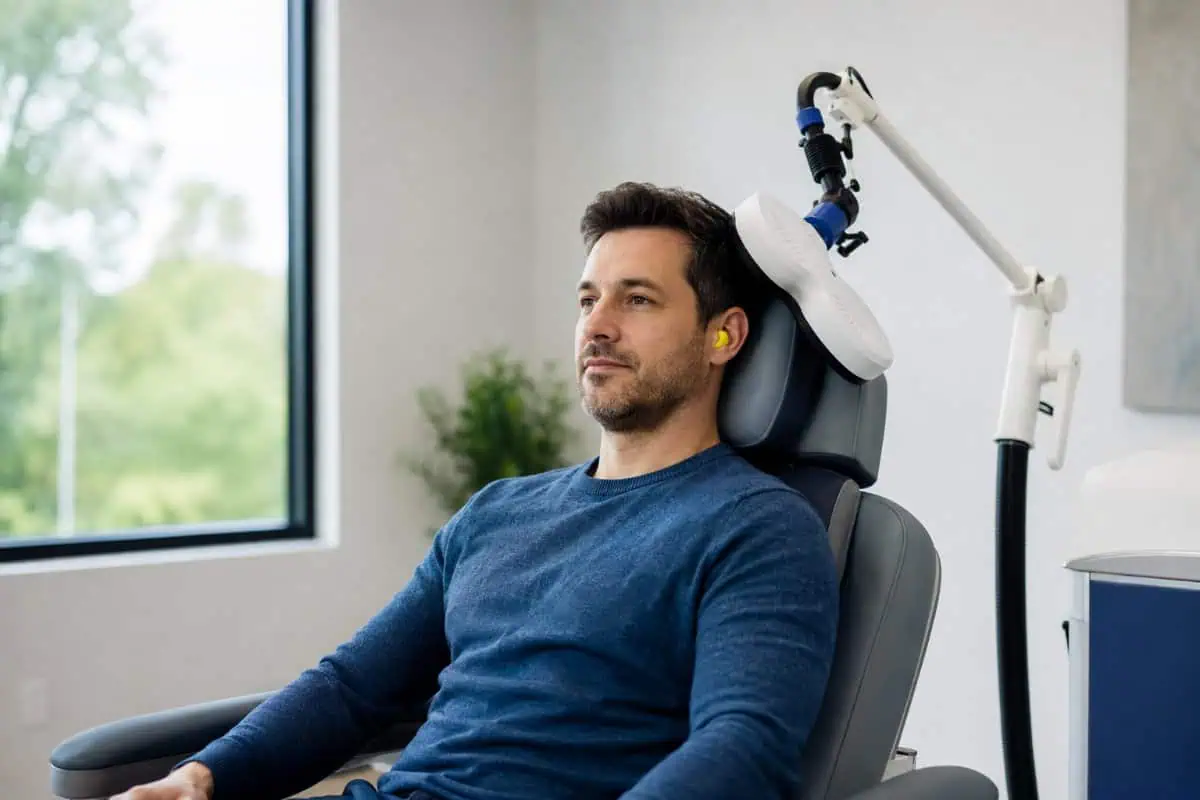
MeRT machine render

Recent Posts

Also Read

Softly lit living room with half-closed blinds, an armchair, a glass of water and sunglasses on a side table, suggesting light sensitivity during post concussion syndrome treatment
Oct 24 2026

Post-Concussion Syndrome Treatment: What Helps When Symptoms Don’t Go Away

There is no single cure for post-concussion syndrome, but most lingering symptoms respond to targeted care. Here is what the evidence supports, what it does not, and...
Dim restaurant at dusk seen from a back booth with a clear sightline to the front door and windows, illustrating hypervigilance
Oct 19 2026

Hypervigilance: What It Is, Why It Happens and How It’s Treated

Hypervigilance is a state of constant alertness for danger. It is a symptom rather than a diagnosis, most often linked to PTSD and anxiety, and it can be treated.

Home office desk with an open laptop, blank notepad, sticky notes and a cup of coffee, illustrating ADHD paralysis
Oct 15 2026

ADHD Paralysis: Why Your Brain Freezes and What Helps

ADHD paralysis is not laziness and not a formal diagnosis. It is a recognizable freeze in starting, choosing or prioritizing, and it responds to the right mix of...
Advanced brain treatment device with a chair and monitor displaying brain scans at Brain Performance Technologies.
Sep 24 2026

Theta Burst Stimulation: The Three-Minute TMS Session, Explained

When people hear that a TMS session can take three minutes, the first reaction is usually suspicion. A standard session runs closer to forty. It is reasonable to assume...
Modern brain treatment room with advanced neuroimaging equipment and a comfortable chair for non-invasive brain therapy at Brain Performance Technologies.
Sep 22 2026

TMS for ADHD: What the Evidence Does and Does Not Support

Most people who ask us about TMS for ADHD have already tried the standard path. Stimulants helped, or helped for a while, or brought side effects that were not worth...
A man sitting calmly in a quiet clinic consultation room considering TMS treatment for PTSD
Aug 26 2026

TMS for PTSD: What the Evidence Shows for Veterans and Civilians

PTSD is one of the conditions where the gap between what treatment can offer and what patients actually receive is widest. Trauma-focused psychotherapy works, and it...
A parent and teenage child sitting together in a bright clinic consultation room discussing TMS treatment options
Aug 19 2026

TMS for Teens: Age Limits, Evidence and What Parents Should Know

Parents who come to us about a teenager have usually been somewhere else first. There has been a diagnosis, one or two medication trials, therapy that helped somewhat...
Patient seated calmly in a TMS treatment chair wearing earplugs, with the magnetic coil arm positioned beside the headrest
Aug 12 2026

TMS Therapy Side Effects: What’s Common, What’s Rare, and How They’re Managed

Every patient who sits down for a TMS consultation asks some version of the same question: what is this going to do to me? It is a fair question, and it deserves a...
Adult patient receiving an accelerated TMS session in a modern clinic treatment chair
Jul 23 2026

Accelerated TMS Receives FDA Clearance: What It Means for Patients

The FDA has cleared accelerated TMS protocols for depression. Learn what changed, who may benefit, and why it matters for patients who travel for treatment.

Child receiving non-invasive magnetic brain stimulation session with a clinician and parent nearby
Jun 22 2026

Accelerated TMS for Autism: What Parents Should Know About Multiple Sessions Per Day

Accelerated TMS for autism explained: multiple sessions per day, theta burst stimulation, what new research shows, and what parents should know about safety.