When ‘attention problems’ aren’t ADHD
A patient comes in for an ADHD check.
They’re high-performing at work most weeks, then “fall apart” for 10 days a month. Their focus drops after poor sleep, a new SSRI dose change, or a stretch of high stress. In the visit, they follow the conversation well, but later can’t recall details when they’re tired or low.
That pattern often points to disorders of attention that can look like ADHD, but aren’t steady or lifelong.
This matters because a quick ADHD label can send treatment in the wrong direction. It can delay care for depression, anxiety, PTSD, medication side effects, or untreated sleep apnea. It can also mean stimulant exposure that isn’t needed, and in the wrong person, stimulants can worsen insomnia, appetite loss, and anxiety.
This guide defines terms in plain language, explains how ADHD differs from other attention-related conditions, and walks through common causes. It also includes a practical assessment flowchart you can use with your clinician, including when to screen mood (for example, Symptoms of bipolar depression can overlap with low drive and poor focus).
What clinicians mean by ‘disorders of attention’
What does “attention” actually mean in a clinic note?
Clinicians use disorders of attention as an umbrella term for trouble focusing, filtering distractions, or shifting between tasks. Attention isn’t one switch. It’s a set of skills, and many medical and mental health problems can disrupt it.
When clinicians measure “attention and concentration,” they usually break it into parts:
- Sustained attention, staying with a task over time
- Selective attention, tuning out noise and sticking with what matters
- Shifting attention, moving between tasks without getting stuck
- Inhibitory control, resisting the urge to click, blurt, or chase the next thought
You may also see disorders of attention and concentration in notes. That phrase confirms the symptoms are real. It doesn’t confirm ADHD.
Two distinctions help:
Transient vs. Persistent. Transient attention problems track with something active right now, sleep loss, grief, a medication change, long COVID “brain fog,” substance use, or a depressive episode. Persistent problems show up across years, often in more than one setting. ADHD is a developmental condition, so symptoms usually start in childhood and continue over time (see basic ADHD summaries in MedlinePlus basics).
Primary vs. Secondary. Primary means attention is the main issue. Secondary means attention is getting hit by another problem.
A brief example: one patient had been on escalating stimulants for “ADHD” for years. Their real driver was chronic insomnia plus panic symptoms. Once sleep was treated and anxiety was addressed, their work output improved and the stimulant dose could be reduced.
Instead of leaning on labels too early, many clinicians describe what they observe:
- Inattentive symptoms (losing track, missing steps, forgetfulness)
- Distractibility (getting pulled off-task by sounds, thoughts, notifications)
- Slowed processing (it takes longer to take in and respond)
- Reduced sustained attention (good starts, weak follow-through)
A solid evaluation is more than a checklist. Most cover four domains:
- History
We map onset (childhood vs later), triggers, sleep, mood, trauma, and meds. Public health guidance also stresses that ADHD symptoms should be persistent and impairing, not occasional (CDC overview). - Functional impact across settings
Home, school, work, driving, relationships. If it only happens in one environment, we ask what that setting is demanding. - Cognitive screening
Brief tests can flag processing speed and working memory (holding info in mind). They don’t diagnose ADHD, but they guide next steps. - Collateral information
Input from a partner, parent, teacher, or employer often clarifies patterns you can’t see alone.
If symptoms are persistent and impairing, we talk options. At Brain Performance Technologies, we also evaluate non-medication paths, including non-invasive, personalized treatment using FDA-approved brain stimulation protocols like TMS, rTMS, SAINT, and MeRT. If you want the basics first, Understanding transcranial magnetic stimulation explains how it works and what sessions feel like. Our team also supports mental health conditions like Autism, PTSD, ADHD/ADD, depression, and more, and we coordinate EKG screening when it’s clinically relevant. TMS is covered by insurance in many cases, and we work with Tricare as well, with a strong focus on real patient outcomes and measurable effectiveness.
Key Takeaways
- Don’t assume ADHD when attention fluctuates with sleep, mood, stress, or medication changes.
- ADHD usually starts in childhood and causes persistent, cross-setting impairment over years, not episodic lapses.
- Screen common mimics: sleep disorders, thyroid disease, anemia, B12 deficiency, chronic pain, and neurological illness.
- Review psychiatric and substance contributors: depression, anxiety, PTSD, bipolar episodes, alcohol, cannabis, sedatives, and withdrawals.
- Use a stepwise workup for disorders of attention: history, red flags, basic labs, cognitive screening, and collateral reports.
- Consider neuropsych testing or qEEG only after standard evaluation is inconclusive or comorbidity complicates diagnosis.
How ADHD’s diagnostic criteria differ from other attention problems
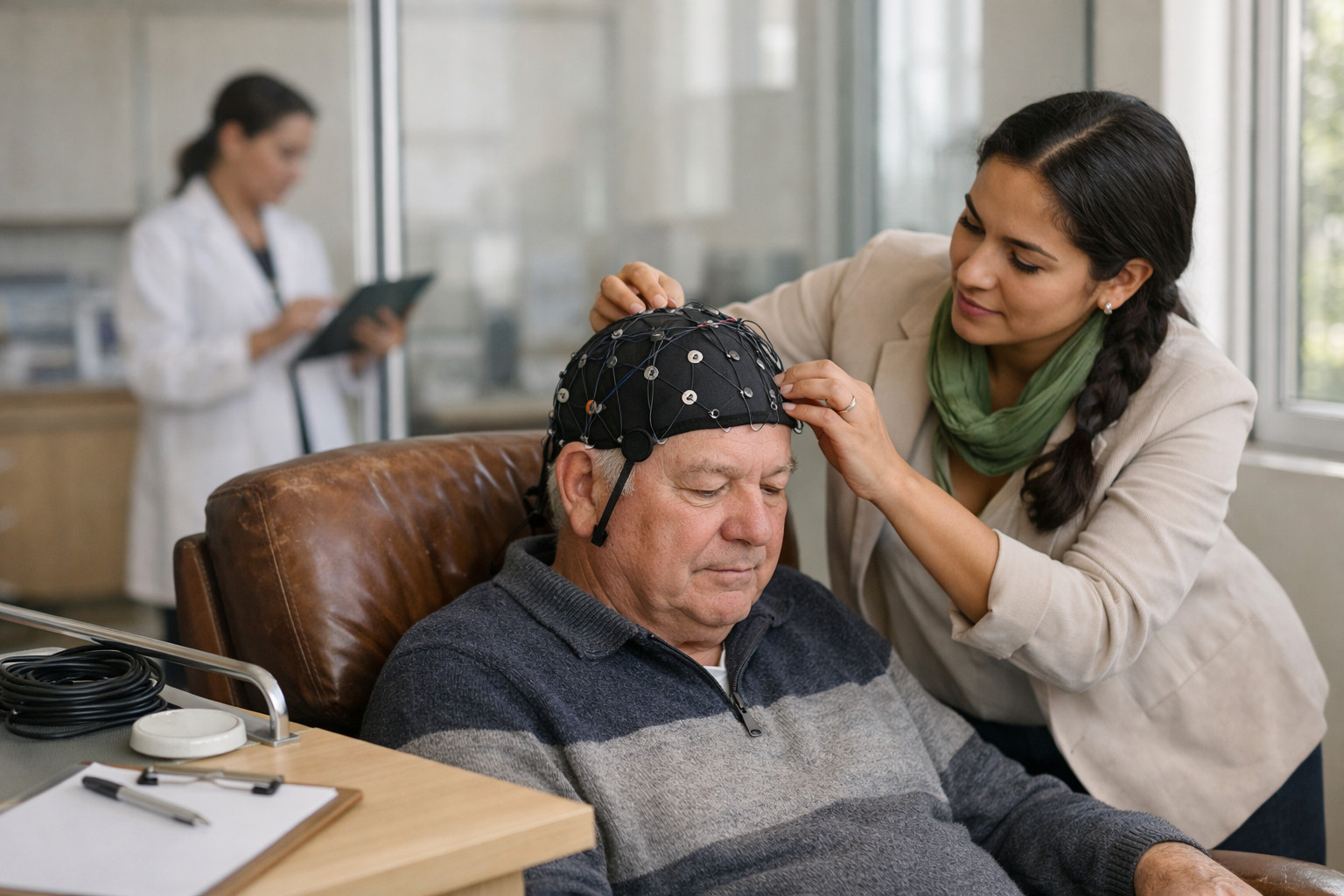
ADHD isn’t “trouble focusing.” It’s a defined pattern.
The DSM-5 describes ADHD as a cluster of symptoms in inattention and/or hyperactivity-impulsivity that lasts at least 6 months, is more severe than expected for age, and causes clear impairment. That impairment must show up in more than one setting, such as home and school, or home and work. Age of onset matters too: symptoms need to have been present before age 12, even if the person wasn’t diagnosed until later.
When you’re sorting ADHD vs disorders of attention, the strongest clue is the life pattern. ADHD often comes with an early history: report cards that mention daydreaming, unfinished work, careless mistakes, or “doesn’t work to potential.” It’s also usually consistent across years and settings. The same problems show up in boring tasks, fun tasks, and high-stakes tasks, not only in one class, one job, or one stressful season. If you want a clearer breakdown of presentations, our guide on Seven Types of ADHD Disorders helps people see how the symptoms can look different day to day.
Many other attention-related conditions look similar on the surface, but the timing is different. Red flags for another cause include:
- Symptoms that start in adulthood after a clear trigger (illness, grief, new job stress)
- Big swings in performance based on sleep
- Symptoms that come in episodes
- Context-specific trouble (only during tests, only in meetings, only when anxiety is high)
Differential diagnosis is mostly about pattern, timing, and context, not any single symptom. “Distractible” can mean ADHD. It can also mean insomnia, depression, PTSD, thyroid disease, medication side effects, or substance use. In practice, the timeline often predicts what will help more than any checklist score.
We also see people labeled “treatment-resistant” when the original diagnosis was too broad. Our team uses careful history and objective testing, and we coordinate EKG screening when needed, to match people to options like TMS, rTMS, SAINT, and MeRT alongside a personalized plan for ADHD, depression, PTSD, autism, and related conditions. Many TMS plans are covered by insurance, and we also work with Tricare.
Medical and psychiatric causes to rule out (sleep, thyroid, medications, mood, substance)
If concentration suddenly worsens, what should you check first?
Start with sleep. It’s the highest-yield “ADHD mimic.” Insomnia can cause slow processing and short attention span. Sleep apnea (breathing pauses at night) can cause fragmented sleep and daytime brain fog, even when someone thinks they slept eight hours. If the story is “I focus fine after good sleep and fall apart after bad sleep,” that points to sleep as a driver.
Then do basic medical screening, especially when symptoms are new or clearly worsening. Thyroid and attention problems can go both ways: hyperthyroidism can look like jittery distractibility, while hypothyroidism often looks like slowed thinking and low drive. Anemia and B12 deficiency can add fatigue and poor concentration. Chronic pain also drains attention because the brain keeps tracking discomfort.
Neurological disease is less common, but it matters when there are focal symptoms (new weakness, seizures, severe headaches) or a clear change from baseline. In older adults, mild cognitive impairment (MCI) and early dementia can show up as forgetfulness and disorganization, but the pattern is progressive and often includes trouble learning new information.
Psychiatric causes are just as important. Major depression often presents as “I can’t concentrate,” but the core issue is low mood, low energy, and slowed thinking. Anxiety can look like inattention because the mind is stuck on worry. PTSD and trauma can create hypervigilance and intrusive memories that pull attention away from the present. The NIH’s overview of ADHD also emphasizes that symptoms overlap across conditions, which is why careful assessment matters (NIH guidance).
Bipolar disorder is another key rule-out. Attention can drop during depression and become scattered during mania or hypomania, but it tends to track with mood episodes. Primary psychotic disorders can also impair attention, usually alongside hallucinations, delusions, or disorganized thinking.
Medications and substances are a common, missed cause. Sedatives, opioids, benzodiazepines, some anticonvulsants, and anticholinergic meds (common in allergy and sleep products) can blunt focus. Alcohol and cannabis can impair attention during use, and both can disrupt sleep in ways that worsen daytime performance.
A second brief example: a college student came in convinced they had ADHD because they couldn’t focus in afternoon lectures. The pattern lined up with heavy caffeine in the morning, a midday crash, and nightly cannabis use that fragmented sleep. When the sleep schedule stabilized and cannabis stopped, attention improved enough that formal ADHD testing was no longer urgent.
Here’s the honest caveat: there’s no single lab test that proves ADHD, or proves you don’t have it. Even good rating scales can be thrown off by sleep loss, anxiety, or depression. That’s why clinicians look for a consistent pattern over time.
Clinically, we sort causes by looking for (1) a tight time link to an illness, med change, or substance shift, (2) systemic symptoms like weight change, tremor, heat/cold intolerance, and fatigue, (3) a daily pattern (worse mornings vs worse afternoons), and (4) mismatches between subjective complaints and objective testing. If attention drops only after 2 pm, sleep debt or medication timing often explains more than a lifelong condition.
When ADHD or other disorders of attention are confirmed, we match treatment to the likely mechanism. For some patients, especially those who can’t tolerate meds or haven’t improved with standard care, brain stimulation can be a next step. Our clinic offers FDA-approved TMS and rTMS, plus SAINT and MeRT, usin
g structured protocols that track effectiveness and patient outcomes over time. If you’re weighing options, our breakdown on Comparing tms efficacy to is a good starting point, and many TMS courses are covered by insurance, including Tricare in eligible cases.
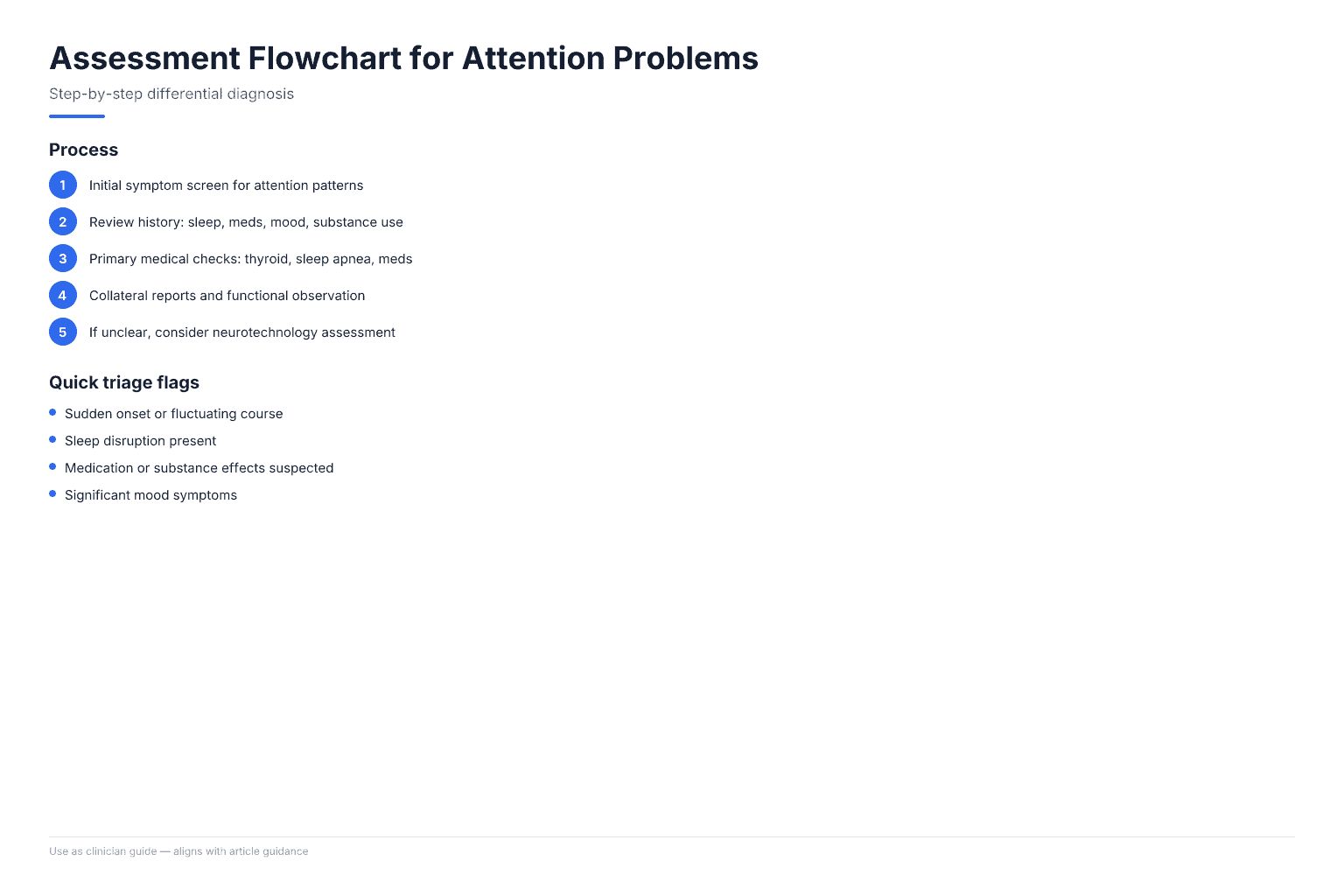
A practical assessment flowchart: step-by-step to a differential diagnosis
Step 1 — Initial triage
First question: is this new, or has it always been there?
Start with an assessment flowchart attention visit that pins down onset, change over time, and where symptoms show up (home, school, work). A sudden drop in focus points away from classic ADHD and toward sleep, medical illness, mood, or substance causes.
Document developmental history, learning issues, head injuries, and family history. Then get specific about sleep, meds (including stimulants, antihistamines, cannabis), caffeine, and alcohol.
Step 2 — Red flag screen
Some attention complaints aren’t routine.
Rapid decline, new focal neuro signs (one-sided weakness, new vision changes), new seizures, severe mania or psychosis, or suicidal thoughts should trigger immediate escalation and safety planning.
Step 3 — Basic medical screening and labs
Rule out common medical causes before you settle on a psychiatric label.
Common labs: CBC, CMP (metabolic panel), TSH, and B12. Add toxicology when it fits the history, and do a sleep assessment. If snoring, witnessed apneas, or severe daytime sleepiness show up, refer for a sleep study.
I’ve seen “ADHD” symptoms improve sharply once iron deficiency, thyroid disease, or sleep apnea was treated. It’s not rare.
Step 4 — Cognitive screening and rating scales
Use tools you can repeat.
Brief measures like MoCA and digit span can help flag processing speed and working memory issues. Add ADHD rating scales and get collateral reports from a partner, parent, teacher, or supervisor. One person’s self-report usually isn’t enough for a solid disorders of attention assessment.
Step 5 — Differential weighting
Now weigh the most likely causes.
If symptoms were present since childhood, occur across settings, and aren’t better explained by sleep or mood, ADHD rises to the top (see NIMH overview). If attention problems track with anxiety, depression, PTSD, or autism, treat the primary condition first and re-check focus.
This works for most people. But if symptoms are severe, safety is a concern, or there’s rapid change, the approach shifts toward urgent stabilization and specialist referral.
Step 6 — When to refer
Complex cases deserve backup.
Refer when there’s diagnostic uncertainty, suspected neurodegenerative disease, persistent symptoms despite targeted care, or a need for formal documentation for school/work accommodations. In our clinics, we may also discuss non-invasive brain stimulation options (TMS, rTMS, SAINT, and MeRT) using personalized treatment protocols, track patient outcomes, and coordinate mental health care. We also do EKG screening when indicated, accept Tricare, and TMS is often covered by insurance. If you’re weighing MeRT, the Benefits of MERT Treatment page helps patients understand what “FDA-approved,” effectiveness, and realistic expectations look like in practice.
When to consider neurotechnology testing and treatment options
Neurotechnology testing isn’t a first step.
It usually means qEEG (quantitative EEG, a brainwave map) and formal cognitive testing (structured tasks that measure memory, speed, and attention). It’s most useful when a standard workup doesn’t explain ongoing disorders of attention and concentration, or when there’s complex overlap, a need for accommodations, or poor response to usual care.
QEEG can show brainwave patterns that may guide neurofeedback or more targeted interventions, but it’s not a stand-alone diagnostic test for ADHD. Cognitive testing can show a clear profile of strengths and weak spots, which helps tailor supports.
Core treatment still starts with evidence-based medical and behavioral care. Neurofeedback or targeted training can be an add-on for selected patients. Some centers, including Brain Performance Technologies in San Jose, Sacramento, and Las Vegas, offer neurotechnology testing and follow-up, but selection and interpretation by an experienced clinical team is what makes it useful.
Frequently Asked Questions
How do I know whether poor concentration is ADHD or another disorder of attention?
ADHD is more likely when attention problems started in childhood and show up consistently across settings like school, work, and home. A good clue is a long-standing pattern of distractibility, impulsivity, or restlessness that others noticed early on. If your focus issues are recent, come and go, or track with sleep loss, stress, depression, anxiety, illness, or new medications, another disorder of attention or a medical cause may fit better.
What basic tests should be done before diagnosing ADHD?
Before diagnosing ADHD, clinicians should rule out common medical and lifestyle causes of inattention with a focused baseline workup. That usually includes a targeted history (including childhood symptoms), review of medications and substances, and a sleep assessment for insomnia or sleep apnea. Many clinicians also order basic labs like TSH, CBC, and B12, and use validated screening tools plus collateral input from a parent, partner, or teacher when possible.
When is qEEG or formal cognitive testing appropriate?
qEEG or formal cognitive testing is most appropriate when the standard evaluation doesn’t give clear answers or the case is clinically complex. It can help when symptoms don’t respond to typical treatment, when there are multiple overlapping conditions, or when you need an objective profile of attention, processing speed, memory, and executive function. In disorders of attention, this kind of testing may guide accommodations, rehabilitation plans, or more targeted treatment choices.
Can treating an underlying medical problem restore attention?
Yes, treating an underlying medical problem can significantly improve attention and concentration, sometimes to the point that ADHD isn’t the main issue. Sleep disorders like sleep apnea, thyroid dysfunction, iron or B12 deficiency, and poorly controlled pain can all impair focus. Reviewing and adjusting medications that affect cognition, such as sedatives or some antihistamines, can also help. For many disorders of attention, fixing the root cause is the fastest path to improvement.
References
- “Understanding ADHD: What you need to know” (magazine.medlineplus.gov) https://magazine.medlineplus.gov/article/understanding-adhd-what-you-need-to-know
- “About ADHD | Attention-Deficit / Hyperactivity Disorder .” (cdc.gov) https://www.cdc.gov/adhd/about/index.html
- “Attention-Deficit/Hyperactivity Disorder: What You Need to Know” (nimh.nih.gov) https://www.nimh.nih.gov/health/publications/attention-deficit-hyperactivity-disorder-what-you-need-to-know
- “Attention Deficit Hyperactivity Disorder | ADHD | ADD” (medlineplus.gov) https://medlineplus.gov/attentiondeficithyperactivitydisorder.html
- “About Attention Deficit Hyperactivity Disorder” (genome.gov) https://www.genome.gov/Genetic-Disorders/Attention-Deficit-Hyperactivity-Disorder
- “Prevalence of attention deficit hyperactivity disorder .” (nature.com) https://www.nature.com/articles/s41380-025-03178-8
- “Attention Deficit Hyperactivity Disorder – StatPearls – NCBI – NIH” (ncbi.nlm.nih.gov) https://www.ncbi.nlm.nih.gov/books/NBK441838/
- “Disorders of Attention | Springer Nature Link” (link.springer.com) https://link.springer.com/book/10.1007/978-3-031-78732-4
- “Attention Deficit Hyperactivity Disorder Symptoms Among .” (openneuroimagingjournal.com) https://openneuroimagingjournal.com/VOLUME/17/ELOCATOR/e18744400328538/FULLTEXT/
- “ADHD Practice Guidelines And Then Some: What’s Missing?” (c-who.org) https://www.c-who.org/wp-content/uploads/2021/10/ADHD-Practice-Guidelines-Whats-Missing.pdf