Auditory Processing
Our ability to not only comprehend what people are saying, but to be able to form coherent sentences, are often things we overlook. When it comes naturally, we hardly ever think about the process our brains go through that allows us to communicate with other people. Communication disorders refer to a broad range of conditions that affect an individual’s ability to understand, produce, or use language effectively. Communication disorders can impact one’s speech, language, voice, fluency, and even social communication. Auditory Processing Disorder (APD) is one of the most common communication disorders.
Auditory Processing Disorder (APD)
Auditory Processing Disorder is a neurological condition that affects how one’s brain processes auditory information. People with APD struggle to hear the small sound differences in words. APD does not mean that someone has hearing loss of a learning disorder, but their brain cannot hear sounds in the same way that others can. For example, someone might say, “my cat is purring,” but someone with APD might hear “my hat is purring.” They may also struggle if a teacher or parent is talking on one side of the child and a friend is talking on the other side of the child; the child would not be able to understand the speech of one or both of the speakers. This miscommunication can lead to trouble following directions, problems distinguishing between similar words or sounds, it can affect their reading and spelling due to challenges with phonemic awareness, and can delay or impair language development.
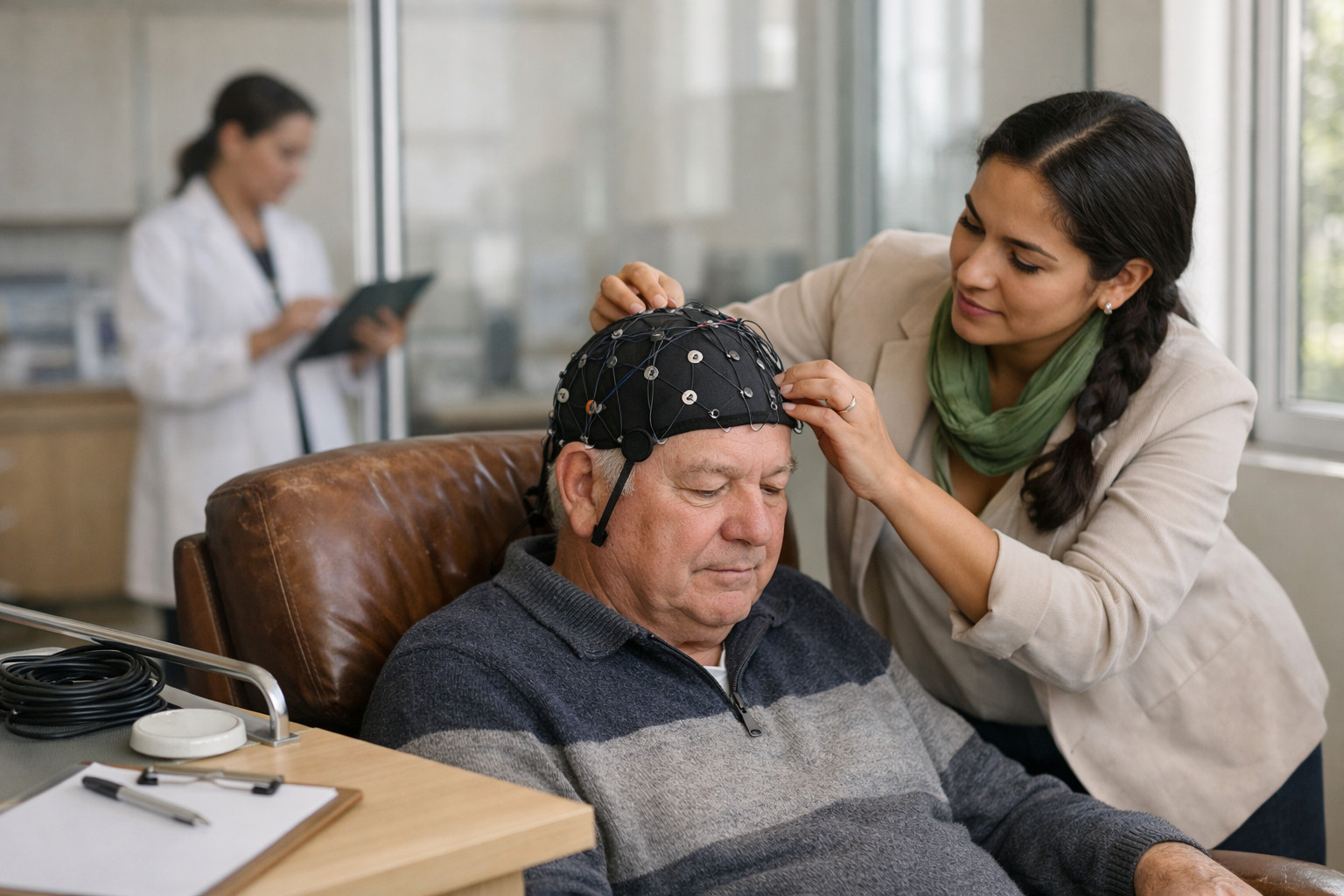
There are many factors that can contribute to APD, often the exact cause is not always clear. Some of these factors in young children can include genetics, prenatal exposure to toxins, perinatal complications, or early childhood infections or injuries. Some risk factors in adults include aging, stroke, head trauma, lead poisoning, and seizure disorders. Unfortunately, there is no cure for APD, however, there are various interventions that can help to manage its symptoms and improve one’s communication abilities. If treatment is needed, the approach is not always the same for everyone. Some treatments available include hearing aids and listening devices, auditory training, computer-based training, and by making accommodating lifestyle changes. Hearing aids with wireless listening devices or FM systems can direct sound to you. This improves auditory access in noisy environments. Auditory training involves working with an audiologist or speech-language pathologist to learn how to differentiate one type of sound from another. Computer-based training is an extension of auditory training based online. By making lifestyle changes, we are altering our surroundings to offer a better environment for someone with APD to understand and communicate. Whether it be in classrooms, at home, or with family and friends, adjustments can be made to make it easier for people with APD. For example, in school we can seat children near the front of the class and away from an open door or noisy fans to eliminate background noise. At home we can develop structure and routines that help a child with APD learn to focus in chaotic environments. According to author James Carter, “A favorable environment is one the provides the child with adequate language exposure and stimulation, reinforces the child’s communicative attempts, and hold realistic expectations according to the child’s developmental stage.” In recent years the use of technology, including brain stimulation, has become more valuable in the treatment plan for APD. MeRT (Magnetic eResonance Therapy) is a form of brain stimulation that helps the parts of the brain that are not communicating as they should. A brain that is functioning optimally can lead to dramatic improvements and learning along with the traditional forms of therapy for APD. To learn more about MeRT and its side effects, you can read our blog here.
Auditory Processing disorder can present significant challenges, but with proper diagnosis and interventions, they can develop strategies to navigate their auditory environment more effectively and learn to participate more fully in social, academic, and professional environments.