Brain wave therapy is transforming how we approach cognitive health. This innovative treatment enhances brain function by training the brain to self-regulate.
Neurofeedback, a key component of brain wave therapy, offers a non-invasive solution. It uses real-time monitoring to help patients modify their brainwave patterns.
This therapy is gaining traction for its effectiveness in treating various conditions. From ADHD to anxiety, neurofeedback provides a promising alternative to traditional treatments.
Patients often experience improved focus, reduced anxiety, and better emotional regulation. These benefits make neurofeedback an appealing option for many.
The therapy is grounded in neuroscience and supported by extensive research. It is FDA-approved for certain conditions, ensuring its safety and efficacy.
Neurofeedback is suitable for both children and adults. It offers a personalized approach, with protocols tailored to individual needs.
Sessions are typically conducted in a clinical setting, lasting between 30 to 60 minutes. The process is straightforward, making it accessible to a wide audience.
As interest in non-invasive treatments grows, brain wave therapy stands out. It represents a significant advancement in cognitive health care.
Understanding Brain Wave Therapy and Neurofeedback
Brain wave therapy offers new solutions for enhancing cognitive performance. Neurofeedback plays a central role in this innovative approach. It involves the careful monitoring and analysis of brainwave activity.
Neurofeedback is a form of biofeedback focusing specifically on brain activity. By using EEG, we track and observe electrical patterns in the brain. These observations are then used to provide feedback to the patient.
Real-time feedback empowers patients to learn how to modify their brainwave patterns. This process is gradual and involves repeated practice over multiple sessions. The ultimate goal is to achieve brainwave optimization.
Neurofeedback’s applications are extensive and include treatment for a variety of conditions:
- ADHD and focus-related issues
- Anxiety and stress management
- Depression and mood disorders
- PTSD and trauma recovery
- Autism Spectrum Disorder
The therapy’s non-invasive nature makes it especially appealing. It offers a drug-free alternative, allowing patients to explore treatment without the concerns of medication side effects.
By understanding how brain wave therapy works, health professionals can better integrate it into their practices. This cutting-edge method can complement traditional treatments, offering a holistic approach to cognitive health. Ultimately, neurofeedback provides new pathways for enhancing brain function, promoting not only symptom relief but also long-term wellbeing.
The Science Behind Brain Waves and Cognitive Function
Brain waves are crucial to understanding cognitive function. They are electrical impulses produced by neurons communicating within the brain. These waves vary in frequency and are categorized into types, each associated with different mental states.
The main brainwave categories are:
- Delta Waves: Slow waves occurring during deep sleep.
- Theta Waves: Present during light sleep and relaxation.
- Alpha Waves: Associated with calm but alert states.
- Beta Waves: Linked to active thinking and problem-solving.
- Gamma Waves: Involved in high-level cognitive processing.
Each brainwave type serves distinct functions, influencing how we think, feel, and act. For instance, dominant beta waves suggest concentration, whereas excess theta may indicate daydreaming. Imbalances can disrupt cognitive processes, impacting focus, mood, and memory.
Neurofeedback works by identifying and correcting these imbalances. Through monitoring, it helps normalize brainwave activity. By training individuals to produce optimal wave patterns, neurofeedback enhances cognitive performance.
Scientific research underpins the effectiveness of these interventions. Studies show how altering brainwave frequencies can improve attention, emotional regulation, and even learning capacity. This scientific basis affirms neurofeedback’s legitimacy as a potent tool in cognitive enhancement, offering evidence-based avenues for both clinical settings and individual improvement.
How Does Neurofeedback Therapy Work?
Neurofeedback therapy is a sophisticated process aimed at optimizing brain function. It leverages the power of operant conditioning, which is a learning method where behaviors are modified through rewards.
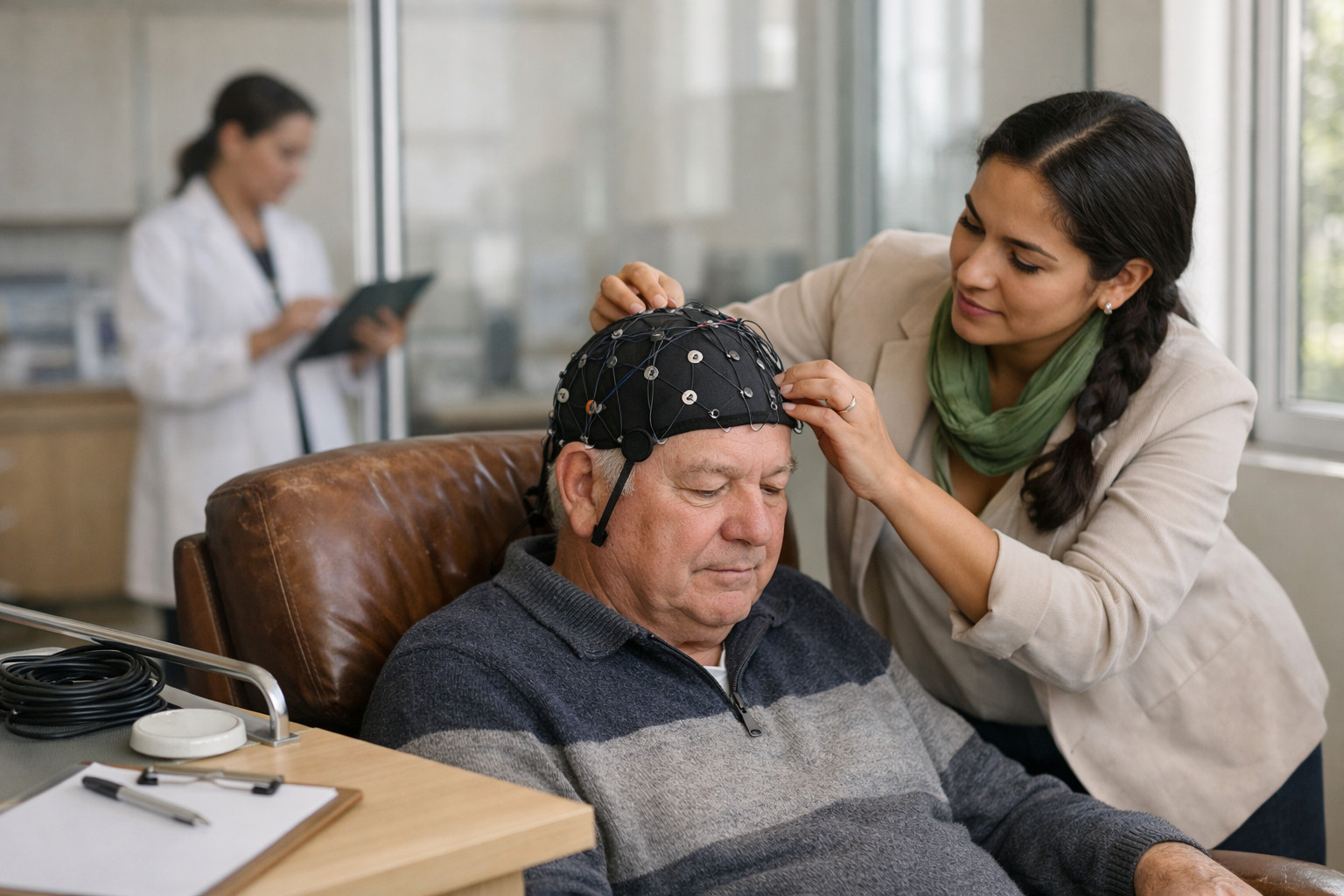
During a session, sensors are placed on the scalp to monitor brain activity through EEG. This method allows the detection of specific brainwave patterns. The collected data is processed immediately and turned into feedback. This feedback often comes as visual or auditory signals.
Participants engage in interactive activities on a computer. These activities adjust based on brainwave patterns. Positive changes are reinforced by rewards, guiding the brain to maintain productive states. Over several sessions, the brain learns to naturally achieve more desirable patterns.
The neurofeedback process comprises several key steps:
- Initial Assessment: Establish a baseline by mapping existing brainwave activity.
- Feedback Sessions: Use stimuli to guide brainwaves toward desired frequencies.
- Review and Adjust: Analyze outcomes and modify protocols as needed for optimization.
Neurofeedback is typically a gradual process, requiring multiple sessions for sustained changes. The number of sessions varies, depending on individual needs and goals. This therapy’s personalized nature ensures that it addresses specific areas of concern for each participant.
The effectiveness of neurofeedback lies in its ability to retrain brainwaves non-invasively. By fostering better self-regulation, it aids in reducing symptoms related to ADHD, anxiety, and other mental health challenges. Clinical studies show that neurofeedback can improve attention spans and emotional stability in participants. This illustrates how neurofeedback can lead to significant cognitive improvements over time.
Brain Mapping: The Foundation of Personalized Therapy
Brain mapping is a crucial step in crafting an effective neurofeedback therapy plan. Known technically as quantitative EEG or qEEG, it assesses brainwave activity. This assessment identifies patterns that may relate to neurological or cognitive concerns.
The process involves placing electrodes on the scalp to record electrical activity across various brain regions. This data helps pinpoint dysregulations or anomalies. Such precision allows for a tailored approach to therapy, addressing unique brain function aspects.
The significance of brain mapping lies in its ability to provide a detailed snapshot of brain health. This snapshot enables the design of targeted and effective treatment plans.
Key components of brain mapping include:
- Collecting Baseline Data: Recording standard brain activity during rest.
- Analyzing Patterns: Comparing brainwaves against normative databases.
- Identifying Targets: Highlighting areas needing intervention and refinement.
By leveraging brain mapping, therapists can customize neurofeedback protocols to enhance therapeutic outcomes. This personalization ensures the intervention aligns closely with the individual’s neurological profile. As therapy progresses, brain mapping may be revisited to measure improvements and guide ongoing treatment. This approach maximizes the potential for cognitive and emotional enhancement, ultimately optimizing overall brain performance.
Key Benefits of Neurofeedback for Cognitive Enhancement
Neurofeedback offers a range of benefits that significantly enhance cognitive function. This form of therapy emphasizes brain self-regulation and optimization. Patients often experience increased focus and improved attention span.
In addition, neurofeedback therapy aids emotional regulation by addressing imbalances in brainwave patterns. This process can lead to better mood stability. Consequently, individuals report a decrease in anxiety and depressive symptoms.
A notable advantage of neurofeedback is its non-invasiveness and lack of medication use. This makes it particularly appealing for those seeking alternative treatments. Patients can undergo this therapy without the risks associated with pharmacological interventions.
Specific benefits of neurofeedback therapy include:
- Enhanced Attention: Improved ability to concentrate on tasks.
- Emotional Stability: Better control over emotional responses and mood.
- Executive Function Boost: Enhanced decision-making and problem-solving skills.
- Memory Improvement: Increased capacity to retain and recall information.
- Stress Reduction: Decreased levels of stress through relaxation and mental clarity.
Moreover, neurofeedback’s benefits extend beyond the therapy sessions. It can lead to long-lasting changes in brain function. Sustained improvements are noted in cognitive and emotional health, contributing to overall well-being.
Ultimately, these enhancements translate to higher productivity and better quality of life. Personalized neurofeedback sessions ensure that therapy aligns with each person’s unique brain activity. This tailored approach reinforces the therapy’s effectiveness, making it a valuable tool for cognitive advancement. As research progresses, the understanding of neurofeedback’s potential continues to evolve, offering promising outlooks for future applications.
Applications in Neurodevelopmental and Mental Health Conditions
Neurofeedback has demonstrated its versatility in addressing various conditions. It’s particularly beneficial for neurodevelopmental disorders and mental health challenges. This non-invasive therapy plays a pivotal role in symptom management.
For children with ADHD, neurofeedback enhances focus and reduces impulsiveness. This is achieved by training specific brainwaves linked to attention. Parents and educators often note significant behavioral improvements.
In the realm of mental health, neurofeedback serves as a valuable tool for managing anxiety and depression. By fostering better brainwave regulation, individuals experience reduced anxiety levels. Patients also report experiencing more stable moods and improved mental well-being.
Neurofeedback’s applications extend to conditions like PTSD and ASD. For PTSD sufferers, it aids in regulating the brain’s response to stress. This leads to decreased symptoms and better coping mechanisms. Meanwhile, individuals with ASD benefit through enhanced social interaction skills.
Several conditions where neurofeedback is applied include:
- ADHD: Improved concentration and behavioral modulation.
- Anxiety Disorders: Reduction in anxiety symptoms and improved relaxation.
- Depression: Enhanced mood regulation and symptom relief.
- PTSD: Better stress management and emotional resilience.
- ASD: Greater social skills and communication improvement.
Across these various applications, neurofeedback provides personalized treatment pathways. Each individual’s unique brainwave patterns guide the therapy. This customized approach maximizes benefits and effectiveness.
In conclusion, the breadth of applications highlights neurofeedback’s adaptability. It offers renewed hope for individuals confronting diverse cognitive and emotional challenges. As this therapy continues to gain prominence, its role in the broader mental health landscape becomes increasingly vital.
What to Expect During Neurofeedback Sessions
Neurofeedback sessions are designed to be straightforward and stress-free. They typically last between 30 to 60 minutes, depending on individual needs. Each session offers an opportunity for progressive learning and brainwave modulation.
Patients begin by sitting comfortably while small sensors are placed on their scalp. These sensors monitor brainwave activity. This non-invasive setup ensures that the process remains painless and comfortable throughout.
Real-time feedback is provided through visual or auditory signals. For example, patients might watch a video that only plays when optimal brainwave patterns are detected. This feedback loop helps the brain learn and adopt healthier patterns.
A typical neurofeedback session might include:
- Preparation: Placement of EEG sensors to monitor brainwaves.
- Monitoring: Real-time feedback through visual/auditory cues.
- Learning: Patients adapt brain activity based on feedback.
- Post-Session Review: Discuss observations and next steps with the therapist.
Sessions are sequential, with gradual improvements observed over time. Most individuals require a series of sessions to notice significant changes. Progress is carefully tracked to tailor the approach to the patient’s evolving needs. By being consistent, patients can improve their thinking skills and emotional health. This makes neurofeedback a useful tool for managing brain health.
Addressing Common Questions and Misconceptions
Neurofeedback is often misunderstood, leading to questions about its legitimacy. Many wonder, “Is neurofeedback legit?” This therapy is backed by scientific research, and studies validate its effectiveness for various conditions.
Another common question is whether neurofeedback is a form of pseudoscience. The answer is clear—neurofeedback is not pseudoscience. It is rooted in neuroscience, employing EEG technology to provide tangible benefits.
Misperceptions often arise from a lack of understanding of the treatment process. Here are key points to clarify some common concerns:
- Legitimacy: Supported by clinical studies and neurological research.
- Safety: Non-invasive and drug-free, with minimal side effects.
- Tailored Approach: Personalized protocols based on qEEG brain mapping.
Some individuals remain skeptical about the role of brain mapping in neurofeedback. They ask, “Is brain mapping legitimate?” Yes, it is. Brain mapping identifies areas of dysregulation to customize therapy, enhancing its efficacy. Addressing these misconceptions helps more people access the real benefits neurofeedback offers for improving cognitive and emotional health.
Why Choose Brain Performance Technologies for Your Neurofeedback Therapy?
Selecting the right clinic for neurofeedback therapy is crucial for effective treatment. Brain Performance Technologies stands out due to its dedication to cutting-edge innovation and personalized care. Our clinics in San Jose, Las Vegas, and Sacramento offer advanced therapies backed by scientific research.
Our team of experienced professionals provides customized treatment plans tailored to each patient’s unique brain patterns and needs. At Brain Performance Technologies, we prioritize a collaborative approach to ensure the most effective outcomes for our patients. This personalized focus allows us to address a wide range of conditions, from ADHD to PTSD.
When considering neurofeedback therapy, here are key reasons to choose Brain Performance Technologies:
- Expertise: Experienced practitioners with extensive training in neurofeedback.
- Innovation: Utilization of the latest research and technology in brain health.
- Comprehensive Support: Ongoing patient monitoring and support to track progress.
Our commitment to non-invasive, personalized treatment protocols ensures patients receive optimal care. If you want to enhance your cognitive function or improve your mental health, consider Brain Performance Technologies. They offer a dependable method to help you achieve your goals.
Conclusion: The Future of Brain Wave Therapy in Cognitive Health
The potential of brain wave therapy to enhance cognitive function is profound. As our understanding of neurofeedback deepens, its applications continue to expand in both scope and effectiveness. Patients experience significant, long-lasting improvements in mental clarity and emotional regulation, demonstrating neurofeedback’s impact.
With ongoing research and technological advancements, the future of brain wave therapy looks promising. Clinics like Brain Performance Technologies continue to lead the way, pioneering innovative treatments tailored to individual needs. By embracing these therapies, we move closer to a future where cognitive health is optimized and accessible to all. The integration of these techniques into mainstream treatment protocols promises a transformative impact on brain health.