Accelerated TMS has officially crossed an important threshold. In May 2026, the FDA granted clearance for accelerated transcranial magnetic stimulation protocols for the treatment of major depressive disorder in adults, clearing the way for clinics to deliver multiple TMS sessions per day on established equipment. The clearance, received by device maker MagVenture, means a full course of TMS can now be completed in days rather than the six or more weeks a traditional once-daily schedule requires.
For patients, this is more than a regulatory footnote. It changes who can realistically access TMS, especially people who travel for treatment, work demanding schedules, or simply cannot put their lives on hold for weeks. At Brain Performance Technologies, we have followed the movement toward accelerated protocols closely, and this clearance confirms the direction the field has been heading. Here is what changed, what it means, and what to ask before pursuing it.
What Exactly Was Cleared?
TMS itself is not new. Transcranial magnetic stimulation has been FDA-cleared for major depressive disorder for years, delivered in the familiar pattern of one session per day, five days per week, over several weeks. What is new is the schedule.
The 2026 clearance expands the approved use of MagVenture’s TMS system to include accelerated protocols, meaning two or more sessions per day, for adults with major depressive disorder. The clearance covers both standard repetitive TMS and intermittent theta burst stimulation (iTBS), a briefer form of stimulation that can take only a few minutes per session. Notably, the cleared accelerated protocols use the same hardware, stimulation output, and safety architecture as conventional once-daily TMS; what changed is the officially sanctioned timing, not the technology.
In practical terms, a treatment course that once required visiting a clinic every weekday for six or more weeks can now be structured into a condensed schedule measured in days.
Why This Matters: Time Is a Barrier to Care
Anyone who has looked seriously at TMS knows the hardest part is often not the treatment. It is the calendar. Thirty or more clinic visits spread across six to eight weeks is a genuine barrier for a parent managing a household, a professional who cannot step away daily, or a patient in crisis who needs relief sooner than a multi-week ramp allows.
The barrier is even higher for people who travel for care. Many of our patients come to us from outside the immediate area, and for military families and others relocating on someone else’s timetable, a six-week daily commitment can be simply impossible. An accelerated schedule changes that math: a patient can travel to a clinic, complete an intensive course while staying nearby, and return home in a fraction of the time. For out-of-town families, this is the difference between treatment being theoretical and being possible.
Speed may matter clinically as well. Research on accelerated protocols, including the Stanford SAINT work we covered in our look at SAINT TMS and the future of depression treatment, has drawn attention precisely because condensed schedules produced rapid responses in studies of treatment-resistant depression. The new clearance is separate from SAINT, but it reflects the same shift in thinking: depression treatment does not have to be slow to be safe.
Does Accelerated TMS Work as Well?
The FDA clearance was based on evidence that accelerated protocols maintain the safety and effectiveness profile of conventional once-daily TMS. That is the regulatory bar, and it is a meaningful one.
It is still fair to be honest about nuance. Accelerated TMS is a newer way of scheduling a proven treatment, and research comparing schedules continues to evolve. Individual responses to TMS vary on any schedule, and no responsible provider should promise that faster means better for every patient. What the clearance establishes is that multiple sessions per day is a legitimate, sanctioned way to deliver TMS for adult depression, giving physicians and patients the flexibility to choose the schedule that fits the clinical picture and the person’s life.
What a Course of Accelerated TMS Looks Like
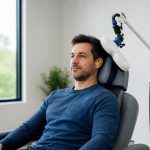
The experience of an individual session does not change: you sit comfortably in a chair, a coil rests against your scalp, and you feel a tapping sensation while remaining fully awake. Sessions using iTBS can be remarkably brief. If you are new to TMS altogether, our walkthrough of your first TMS session describes the experience step by step.
What changes is the rhythm of the day. Instead of one session and done, an accelerated schedule involves several sessions spaced across the day, with breaks between them. Over a small number of days, you accumulate the same number of total sessions that a conventional course spreads over weeks. Side effects are similar to conventional TMS, most commonly mild scalp discomfort or headache that tends to fade, though the condensed schedule means your care team monitors tolerance closely from day to day.
At BPT, accelerated TMS fits naturally within how we already work: qEEG-informed evaluation, physician oversight, and schedules tailored to the individual rather than a one-size-fits-all default. For some patients a conventional pace remains the right choice; for others, particularly those balancing distance and time, acceleration is the option that finally makes treatment feasible.
Questions to Ask Before Pursuing Accelerated TMS
If you are considering an accelerated course, a few questions will serve you well. Ask whether the clinic’s protocol follows the FDA-cleared parameters and what stimulation form is used, rTMS or theta burst. Ask how many sessions per day are planned, how they are spaced, and how tolerance is monitored. Ask what happens if you need the schedule adjusted. And if you are traveling for treatment, ask how follow-up and continuity of care will be handled after you return home.
A trustworthy provider will welcome these questions. Depression treatment is deeply personal, and the goal of acceleration is to serve the patient’s life, not to rush the care.
The Bottom Line
The FDA clearance of accelerated TMS protocols marks a genuine shift: a proven depression treatment can now be delivered in days instead of weeks, on the same trusted technology, with the same safety standards. For busy patients, and especially for those who travel for care, it removes one of the biggest practical barriers between wanting treatment and completing it.
If you have been putting off TMS because the calendar never worked, this may be the moment to look again. Contact Brain Performance Technologies to discuss whether an accelerated schedule fits your situation.
Frequently Asked Questions
What did the FDA actually clear?
In May 2026, the FDA cleared an expanded indication for MagVenture’s TMS system to include accelerated protocols, meaning two or more sessions per day, for major depressive disorder in adults. The clearance covers both repetitive TMS and intermittent theta burst stimulation and uses the same hardware and safety architecture as conventional TMS.
How fast can accelerated TMS be completed?
Instead of one session per day over six or more weeks, accelerated protocols deliver multiple sessions per day, allowing a full course to be completed in days. The exact schedule depends on the protocol your physician recommends and how well you tolerate treatment.
Is accelerated TMS as safe as regular TMS?
The clearance is based on maintaining the same safety and effectiveness profile as conventional once-daily TMS. Side effects are similar, most commonly mild scalp discomfort or headache, and a condensed schedule comes with close day-to-day monitoring.
Is accelerated TMS the same as SAINT?
No. SAINT is a specific Stanford-developed accelerated protocol cleared separately. The MagVenture clearance more broadly sanctions accelerated scheduling of established rTMS and iTBS protocols. Both reflect the field’s movement toward condensed treatment.
Who is accelerated TMS cleared for?
The FDA clearance applies to adults with major depressive disorder. Use of accelerated schedules for other conditions or ages remains an emerging clinical and research area that should be discussed individually with a qualified physician.
Why does accelerated TMS matter for people who travel for treatment?
A conventional TMS course requires daily visits for six or more weeks, which is often impossible for out-of-town patients. An accelerated course can be completed during a short stay, making TMS realistic for people who live far from a provider.
This article is for educational purposes and is not a substitute for personalized medical advice. Always consult a qualified healthcare provider about your specific situation.