A surprising snapshot: ADHD, brain rhythms and a measurable gap
EEG research has repeatedly found that a sizable subset of people with ADHD show a higher theta/beta ratio than peers, meaning slower, “drifty” activity (theta) outweighs faster, task-focused rhythms (beta). That signal is one reason adhd brainwave frequencies therapy, spanning neurofeedback and stimulation-based approaches, has held long-term clinical interest.
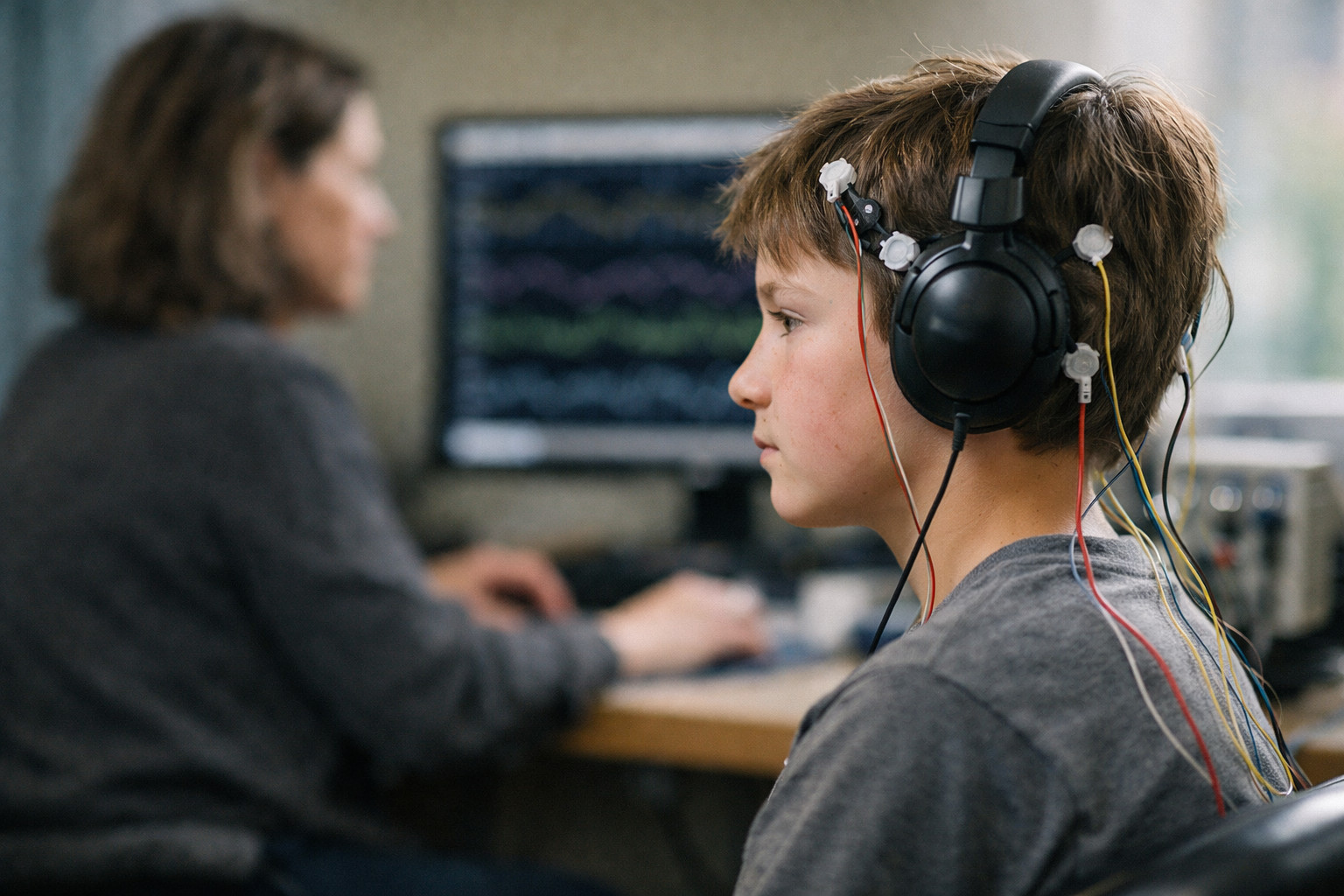
Imagine a 14-year-old who wants to follow instructions but keeps missing steps, blurting answers, and bouncing between tasks. On paper it can look like carelessness or defiance; in real life it feels like effort without traction. One plausible explanation is a mismatch between the brain’s moment-to-moment rhythm and the demands of the moment: networks may default toward under-arousal (more theta), making sustained attention harder, while bursts of faster activity can be poorly timed or inconsistent, showing up as impulsivity, restlessness, and the classic “starting strong, then fading.”
EEG patterns aren’t a diagnostic stamp, and not every person with ADHD fits the same profile. Medication status, sleep debt, anxiety, age, and even the task you’re doing during recording can shift brainwave activity. Still, this measurable gap can be clinically useful because it offers a window into mechanism: how attention, inhibition, and arousal are regulated in the brain, especially when interpreted alongside symptoms, history, and standardized rating scales.
Here’s what we’ll cover: what the main brainwave frequencies do, why they may differ in ADHD, what the evidence says (including limitations), and which therapy options are most realistic, starting with low-risk foundations and moving toward more targeted interventions when appropriate.
Key Takeaways
- ADHD often shows increased theta and reduced beta on EEG, which can track inattention and distractibility in some patients.
- Use qEEG selectively, review regional power and theta/beta ratio, and interpret results cautiously due to variability.
- Start with sleep and behavior supports, then trial low-risk entrainment apps before clinician-led neurofeedback or neuromodulation.
- Neurofeedback protocols like theta/beta training or SMR can help some patients, but effects vary across trials.
- Consider combined care since stimulants and noradrenergic meds can shift oscillations, and frequency-targeted care isn’t one-size-fits-all.
- Track progress with symptom scales, cognitive tests, and time-limited trials, and stop if risks or poor fit emerge.
Frequency bands and ADHD: which rhythms map to which symptoms
Theta (4–8 Hz): when the brain drifts off-task
Why does “spacing out” happen even when motivation is high? Theta isn’t “bad” brain activity, it’s normal in drowsiness, internal thinking, and memory work. The issue in ADHD is often timing and context. When theta dominates during tasks that require steady attention, it can look like daydreaming, slow starts, and that familiar “I read the paragraph but none of it stuck” experience.
Across studies, EEG research finds group-level differences in oscillatory power in ADHD, including shifts toward slower rhythms. For example, baseline EEG profiles in children with ADHD show measurable differences in resting and attention conditions (Thomas et al. in Neuropsychobiology via Ovid). Clinically, that often matches what families describe: the child isn’t defiant, they’re just not fully “online” yet.
Beta (13–30 Hz): the rhythm of active focus and top-down control
Beta is the workhorse frequency for staying engaged, filtering distractions, and holding a goal in mind. When beta is underpowered or poorly coordinated, distractibility rises, follow-through weakens, and it becomes harder to inhibit the “next shiny thing.” That’s why you’ll often hear clinicians discuss beta waves ADHD patterns, particularly in frontal regions tied to executive control.
A useful data point: young adults with ADHD have shown reduced oscillatory power in faster frequencies, particularly in alpha, with broader implications for higher-frequency control dynamics (Woltering et al., 2012). In everyday terms, low or unstable beta can feel like steering a car with loose power steering, you can drive, but it takes constant correction.
The theta/beta ratio: helpful signal, not a standalone diagnosis
The theta beta ratio gained traction because many ADHD cohorts show relatively higher theta compared with beta. It’s a clean, intuitive story: more “idling” plus less “task mode.” In some patients, it tracks inattention reasonably well and can help guide what to try next.
Yet it’s not universal. Age, sleep, anxiety, medication status, and even electrode placement can swing the ratio. Some patients with clear ADHD symptoms don’t show the classic elevation, and some people without ADHD can. That limitation matters: it’s a pattern that can support a clinical picture, not replace it.
So frequency-based care needs careful framing. It’s not “fix the ratio, cure ADHD.” It’s using brain-based measurements to inform personalized treatment, then verifying, through outcomes, that changes translate into real-world improvements in school, work, and daily functioning.
Alpha and gamma: inhibition, processing speed, and cognitive control
A fact that surprises many people: alpha (roughly 8, 12 Hz) is often tied to inhibition and gating, basically the brain’s ability to suppress irrelevant input. Several studies report alpha-band differences in ADHD, including altered power and connectivity patterns (Debnath et al., 2021 on ScienceDirect). When alpha gating is inefficient, the world can feel “too loud,” cognitively speaking, and focus becomes fragile.
Meanwhile, gamma (typically 30+ Hz) is linked to fast information binding and local processing. It’s harder to measure cleanly on routine EEG, so it’s used less often in everyday clinical decision-making, but conceptually it still matters. When inhibition and fast processing don’t coordinate, the boundary between “think” and “do” can blur, showing up as impulsivity or motor overflow.
The practical takeaway is simple: brain rhythms don’t map one-to-one with a single symptom. Hyperactivity can involve inhibitory control (alpha), action selection (beta), and arousal regulation (theta) at the same time. That complexity is exactly why non-invasive approaches like neurofeedback and brain stimulation are typically built around protocols, not single-frequency “hacks.”
From rhythm to behaviour: mechanistic pathways connecting oscillations and ADHD symptoms
Synchrony is the real issue, not just “more” or “less” power
One clinical claim worth making carefully is that coordination often matters more than raw power. Oscillatory synchrony ADHD problems suggest brain regions aren’t timing their communication well, especially between frontal control areas and networks that manage attention. Raised midline theta can reflect a brain that slips into internal processing too easily, while reduced frontal beta can mean weaker top-down “stay on task” signaling.
In real life, that looks like inconsistent performance. A patient can lock in for 20 minutes, then abruptly fall off. It’s not laziness; it’s state regulation. That variability also helps explain why some “treatment-resistant” patients report medication helped on certain days and barely touched others: if network dynamics fluctuate, the same input won’t always produce the same output.
Default mode network vs task-positive networks: the attention tug-of-war
A quick anecdote we hear often: “I’m trying, but my brain keeps sliding away.” A useful model behind that experience is the push-pull between the default mode network (DMN) and task-positive networks. The DMN is active during mind-wandering and self-referential thought, while task-positive networks support goal-directed attention. In ADHD, the DMN can intrude during tasks, creating that persistent tug-of-war, core to many default mode network ADHD complaints.
Oscillations are one way the brain toggles between these modes. If the rhythms that support task engagement (often beta-range coordination) don’t stabilize, DMN activity can leak in. Some patients describe it as having two radios on at once, one playing the task, the other playing everything else.
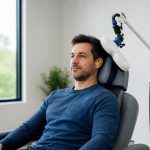
When you’re comparing neuromodulation options, it helps to understand how different methods aim for network-level change. For example, our overview on Understanding transcranial magnetic stimulation for anxiety explains how targeted stimulation is used to influence circuits, the same general logic clinicians adapt when protocols are designed around attention and executive control.
Cortical–subcortical loops: why impulsivity and hyperactivity show up in the body
Impulsivity and motor hyperactivity aren’t just “too much energy.” They’re often a loop problem: cortex (planning and inhibition) interacting with subcortical systems (habit, reward, motor readiness). When frontal beta control is weak or inconsistent, “stop signals” arrive late. When slower rhythms dominate at the wrong time, initiation and inhibition can both get messy, leading to fidgeting, blurting, or acting before evaluating consequences.
This is where frequency-guided neuromodulation aims to be more precise. Some approaches are FDA-cleared for specific indications, while others are off-label or investigational in ADHD. A current example is a clinical trial exploring paired associative deep TMS frequencies in adults (ClinicalTrials.gov listing NCT07105475). That kind of work matters because it ties frequency choices to measurable effectiveness and patient outcomes, not just theory.
One honest caveat: entrainment-style tools (audio beats, light/sound) can feel helpful in the moment, but the evidence is mixed and effects may be modest or short-lived. If you want a sense of what’s been tested, there’s research on brainwave entrainment and problem-solving in attention difficulties (csustan.edu). In clinic, our team treats these as adjuncts, not replacements, especially when symptoms significantly impair school, work, or broader mental health.
Therapies that target brain frequencies: what the evidence shows
Neurofeedback: common protocols and what trials actually support
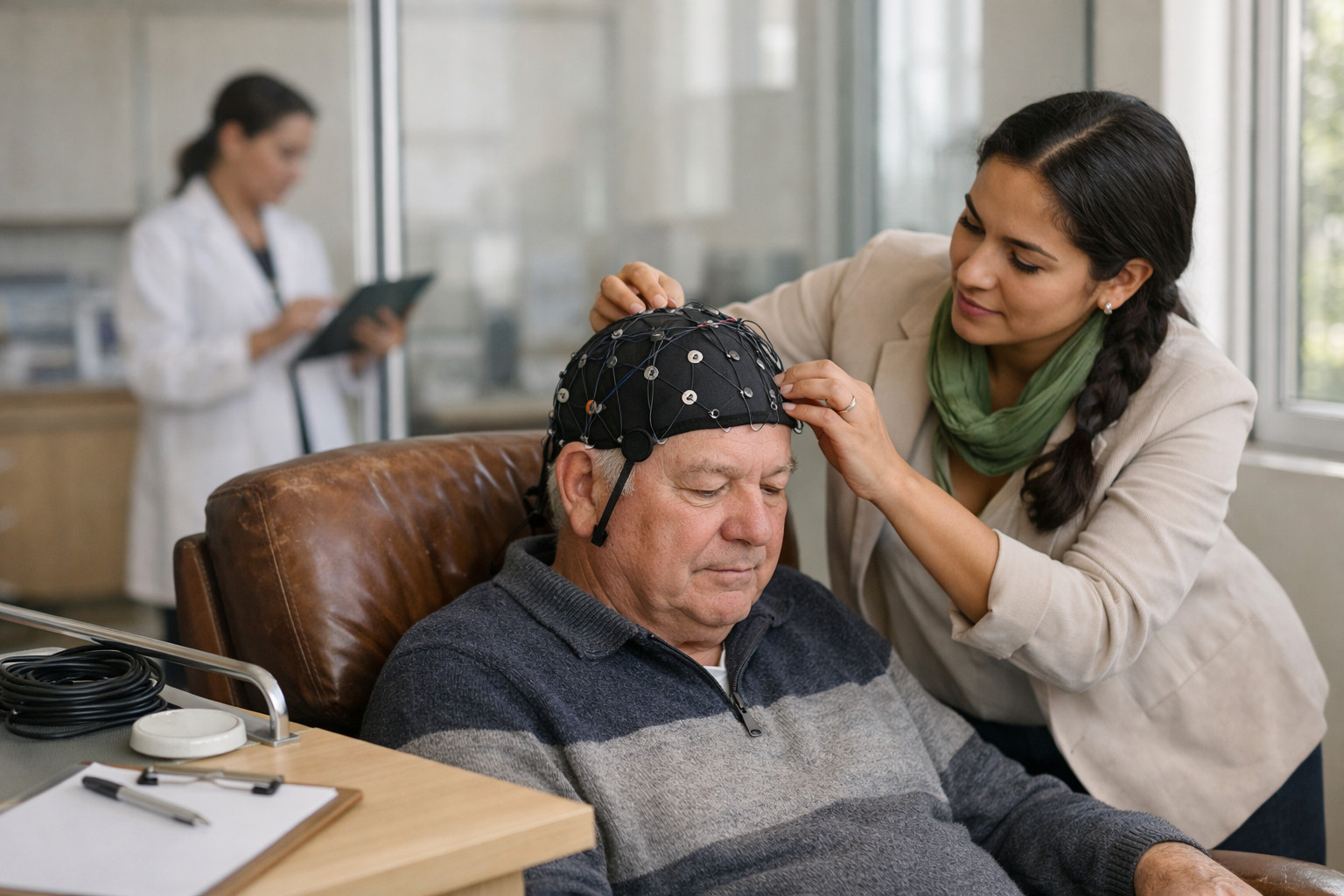
Can training your brainwaves change symptoms? Neurofeedback for ADHD usually aims to nudge the brain away from “too slow” patterns (excess theta) and toward steadier alertness (beta or SMR). The two workhorse protocols are theta/beta training (reduce theta, increase beta) and SMR training (typically 12, 15 Hz over sensorimotor cortex, tied to motor inhibition and sleep stability). In real clinics, targets are often individualized using the person’s EEG profile rather than a one-size-fits-all script, because ADHD isn’t a single oscillation problem.
The evidence base is mixed but not empty. Randomized trials and meta-analyses show symptom improvement in some groups, but effect sizes tend to shrink when studies require tighter blinding and rely on probably-blinded ratings (teacher reports are often less “impressed” than parent reports). The practical takeaway: expect a training block, not a quick hit. Most protocols run about 30, 40 sessions, and you track outcomes weekly so you can stop or pivot if nothing is moving.
A useful reality check is that EEG differences in ADHD aren’t uniform. For example, young adults with ADHD have shown altered resting-state power in faster frequencies, notably alpha (resting-state EEG findings in young adults with ADHD, Springer). That variability is exactly why a personalized approach matters if you’re going to pursue frequency-targeted treatment with any seriousness.
Non-invasive brain stimulation: tDCS and rTMS/dTMS
tDCS ADHD protocols usually target prefrontal networks involved in attention and impulse control. It’s non-invasive and relatively low intensity. The mechanism is more about shifting cortical excitability and network efficiency than “forcing” a specific frequency. Results so far are promising for some executive-function measures, but inconsistent for broad symptom change, especially when dosing, montage, and concurrent cognitive tasks vary. RTMS (and deeper coils in dTMS) is a different animal. It uses stronger field effects and more standardized dosing, and it can be delivered with frequency-specific protocols (higher vs lower frequency) depending on whether you’re aiming to upregulate or downregulate a circuit. There’s active clinical research right now looking at paired high/low-frequency approaches in adults with ADHD (clinical trial listing on ClinicalTrials.gov). In practice, this is where we start thinking about treatment-resistant cases, comorbid depression/anxiety, and whether we’re stacking interventions or just adding noise. At Brain Performance Technologies, we also see patients who want to understand how options like MeRT, rTMS/TMS, and SAINT fit into a broader plan, especially when they’re balancing school/work demands and medication tolerability. (We support patients across San Jose, Las Vegas, and Sacramento, including TriCare eligibility where applicable.)
If you’re weighing neuromodulation against meds or behavioral care, it helps to see the tradeoffs laid out, and we often point people to Comparing tms efficacy to traditional treatments while we’re mapping out options and protocols.
Auditory/visual entrainment and commercial devices: early data, big pitfalls
Binaural beats ADHD and isochronic-tone products are everywhere, and some people do notice a short-term change in focus. The strongest recent work is still early-stage and highly parameter-sensitive. A 2025 paper in Scientific Reports tested how binaural beat settings affect attention and entrainment and found outcomes depend heavily on the exact parameters used (parametric binaural beats study, Nature/Scientific Reports). Translation: “binaural beats” isn’t one intervention, and most commercial tracks don’t tell you what you need to know.
Just as important, don’t confuse “feels calming” with durable symptom control. Entrainment tools can be a low-risk adjunct, but they’re not FDA-approved treatments for ADHD, and they can distract families from higher-yield basics (sleep, school supports, medication trials when appropriate).
How medications shift oscillations, and why combinations can make sense
Stimulants and noradrenergic drugs change network signaling, which can show up in oscillatory patterns on EEG. Clinically, that matters because it can change what you see on a qEEG and how someone responds to training. A common pattern is that medication improves task engagement enough that neurofeedback learning “sticks” better. The flip side is measurement hygiene: standardize your conditions (on-meds vs off-meds) when you’re tracking objective change, or you can end up comparing apples to oranges.
This is where adhd brainwave frequencies therapy can make sense as a complementary layer rather than a replacement. The upside is potentially better targeting for specific symptoms (sustained attention, inhibition). The downside is complexity: more moving parts, more cost, and a higher bar for clean monitoring and time-limited trials.
A stepwise approach for clinicians and families: assessing and choosing brainwave interventions
Assess first: when qEEG helps, and where it misleads
When is a qEEG actually worth doing? It tends to be most helpful when symptoms look atypical, treatment response has been inconsistent, or you’re considering a brain-based intervention and want clearer targets before committing time and money. In practice, you’re reviewing regional power (frontal vs central vs posterior), connectivity patterns, and ratios like theta/beta, then interpreting those findings alongside sleep, medications, developmental history, and day-to-day functioning. ADHD “subtypes,” comorbid anxiety, chronic sleep debt, concussion history, and even caffeine can all shift the signal.
One caveat that saves people time (and prevents overconfident conclusions): theta/beta ratio isn't a universal ADHD signature. Some patients show it strongly, others don’t, and some “abnormal” patterns appear in people who function perfectly well. Use qEEG to refine a plan, not to justify one.
A practical pathway: low-risk first, then escalate
A useful fact to keep in mind: the lowest-risk interventions often move the needle the most when they’re done consistently. Start with what reliably influences arousal and attention without any device, sleep timing, morning light exposure, aerobic exercise, and behavioral scaffolding that reduces decision fatigue. If a family wants something immediate and low-commitment, entrainment apps (audio or visual) can be a reasonable short trial, as long as expectations stay modest and you’re tracking symptoms rather than chasing a “perfect frequency.”
From there, step up to clinician-led neurofeedback with a defined protocol matched to the person’s pattern (for example, theta/beta training, SMR, or a targeted approach based on the recording). This is where “personalized treatment” stops being a marketing phrase and becomes session-by-session calibration: adjusting targets, spacing, and reinforcement based on real response.
If impairment is high, progress has stalled, or the picture looks treatment-resistant, consider higher-intensity neuromodulation such as tDCS or rTMS/dTMS. This is also where comorbid mental health issues matter, because the same networks that shape attention often influence mood, sleep, and emotional regulation. In our clinics, our team often coordinates these decisions with the broader care plan, and for patients who need advanced options, Brain Performance Technologies can discuss availability across San Jose, Las Vegas, and Sacramento, including SAINT, MeRT, and rTMS/TMS (with TriCare options for eligible patients).
Monitoring outcomes: treat it like a trial, not a hope
Here’s the cleanest way to prevent “we tried it and it didn’t work” from becoming a dead end: pick 2, 3 outcome measures and hold them steady for 6, 8 weeks. Combine (1) symptom scales (parent/teacher ADHD ratings when relevant), (2) a simple cognitive measure (continuous performance testing or a working-memory metric), and (3) objective EEG markers when you’re using EEG-guided care (same montage, same time of day, same medication status). If you’re doing adhd brainwave frequencies therapy and nothing measurable shifts by week 6, the responsible move is to adjust the protocol, or stop.
Define “success” upfront, too. For one family, it’s fewer missing assignments. For another, it’s less emotional volatility at 4 p.m. Concrete outcomes lead to faster, calmer decisions, and better patient outcomes.
Comparing outcomes: neurofeedback, medication and combined strategies (real-world illustrations)
The common “neurofeedback vs medication” argument misses the question that matters in real life: what changes first, and what lasts. Below are three typical timelines we see when families and adults compare medication, neurofeedback, and combined strategies that target attention-related brain rhythms.
Vignette 1, child (predominantly inattentive): An 11-year-old with daydreaming, slow homework start-up, and inconsistent classroom output. Stimulant medication improved on-task behavior in week 1, but appetite and sleep took a hit. Neurofeedback (2 sessions/week) didn’t feel dramatic early, but by weeks 4, 6, teachers reported fewer “missed directions” and less mental fatigue, consistent with EEG research in ADHD that often highlights differences in resting-state oscillatory activity, including alpha-band findings (resting-state EEG findings in young adults with ADHD).
Vignette 2, adult (impulsivity): A 34-year-old with blurting, risky spending, and “can’t pause” reactions. Medication reduced impulsive errors quickly, but rebound irritability showed up in late afternoon. Adding structured sessions focused on self-regulation skills plus neurofeedback helped smooth evenings over about 6, 8 weeks, mainly by improving the “moment of awareness” before the impulse, not by magically shutting impulses off overnight.
Vignette 3, combined-treatment responder: A college student wanted fewer side effects but didn’t want grades to suffer. We kept a low-dose stimulant for immediate coverage, then layered a personalized plan using neurofeedback and coaching. By weeks 8, 10, they reduced dose on heavy study days without losing performance. That’s often the sweet spot for this kind of brain-rhythm work when the goal is durability, not just speed.
Here’s the tradeoff snapshot:
| Option | Onset speed | Side effects | Durability | Accessibility/cost |
|---|---|---|---|---|
| Medication | Fast (days) | Appetite, sleep, BP/HR changes | Often stops when stopped | Usually covered, prescriber needed |
| Neurofeedback / brain frequency therapy | Slower (weeks) | Typically low, but fatigue/headache can happen | Can persist if skills generalize | Time-intensive, variable coverage |
| Combined strategy | Fast + builds over time | Often lower med burden | Best chance of long-term self-regulation | Most planning, more visits |
Matching matters. If your priority is rapid symptom control for school or work, meds often win on speed. If your goal is long-term self-regulation, fewer side effects, or you’ve been treatment-resistant, neurofeedback or combined care may fit better, especially when mental health complexity is in the mix (and yes, sometimes what looks like ADHD overlaps with mood patterns, which is why we screen carefully using guides like Symptoms of bipolar depression vs depression during intake).
Limitations, safety concerns and current research gaps to watch
A quick reality check: ADHD isn’t one brain pattern. It’s a symptom cluster with multiple biological routes, which is why single-frequency targeting can miss the mark. Some people show lower alpha power or connectivity differences, others don’t, and findings can vary by age, task demands, and comorbid anxiety or sleep disruption (EEG connectivity differences reported in ADHD). That heterogeneity is exactly why individualized planning matters. “10 Hz for everyone” is rarely a serious clinical strategy.
Research quality is improving, but the gaps are still real. Many studies struggle with small sample sizes, blinding (it’s hard to create a believable sham for neurofeedback or brain stimulation), inconsistent protocols, and mixed outcome measures (parent ratings vs objective tests vs EEG changes). Even when entrainment is studied, parameter choices matter, and attention effects don’t always replicate cleanly across settings, something newer work highlights by systematically varying stimulation parameters (parametric binaural beats research in Scientific Reports). An honest limitation to name: even with good protocols, not everyone responds, and clinicians still can’t reliably predict responders from non-responders with high accuracy.
Safety discussions should be straightforward. Neurofeedback is generally non-invasive, but it’s not “risk-free.” Temporary headaches, fatigue, irritability, sleep disruption, or symptom flare can happen, especially with overly aggressive protocols, poor session spacing, or a mismatch between targets and the patient’s baseline arousal. For brain stimulation approaches (including FDA-approved devices used for other indications), contraindications can include seizure history, certain implanted devices, and some medication combinations. That’s why qualified practitioners, medical screening, and clear protocols matter for patient outcomes.
Consumer devices are the other concern. Marketing often over-promises, and the ethical issue is simple: people can spend a lot of money chasing a one-size-fits-all frequency program while delaying treatments with stronger evidence. If you’re considering home entrainment, treat it as an adjunct, not a primary plan, and be wary of anyone claiming they can “cure ADHD” with a single setting.
Practical next steps: how to evaluate options and when to seek specialist care
If you remember one thing, make it this: start with diagnostic clarity, not gadgets. ADHD is a spectrum, and treatment planning changes substantially depending on presentation, comorbid anxiety, sleep issues, learning disorders, or trauma history. It helps to map symptoms against subtypes like the Seven Types of ADHD Disorders before investing in brain-based tools. Then set realistic goals, “finish homework without a meltdown 4 nights/week” beats “fix attention”, because measurable goals are how you judge effectiveness and patient outcomes.
In our practice, we use a pre-treatment checklist for adhd brainwave frequencies therapy, whether it’s neurofeedback, entrainment, or clinic-based neuromodulation:
- Confirm diagnosis and rule-outs (sleep apnea, thyroid issues, substance use, uncontrolled anxiety)
- Define 2, 3 measurable targets (time-on-task, impulsive interruptions, emotional reactivity)
- Verify credentials and protocols (BCIA-style training for neurofeedback, medical oversight for stimulation)
- Ask about safety: non-invasive doesn’t mean “no screening,” especially with seizure history
- Get clarity on what’s FDA-approved vs off-label, and what’s marketed as “wellness”
Medication or combined care should move to the front when symptoms are moderate-to-severe, school/work functioning is sliding, or the case is treatment-resistant. If you’re stuck after solid behavioral supports and a medication trial (or can’t tolerate meds), that’s a clean moment to refer for qEEG-guided neurofeedback or specialty evaluation. The BYU paper on brain dysregulation and EEG-informed care is a useful primer for clinicians and families (review from scholarsarchive.byu.edu on ADHD brain dysregulation and treatment).
When you’re trying to find neurofeedback provider options, prioritize transparent outcome tracking, a clearly individualized plan, and a clinician who will coordinate with your prescriber or therapist. For those exploring clinic-based neuromodulation, our team can also walk through options like SAINT, MeRT, and rTMS/TMS at Brain Performance Technologies locations in San Jose, Las Vegas, and Sacramento, including TriCare pathways where applicable. And for families wondering when to seek help ADHD, the rule is simple: if symptoms are impairing daily life for more than a few months, don’t wait for a crisis, bring in a specialist.
Frequently Asked Questions
Can brainwave therapy cure ADHD?
No, brainwave therapy can’t cure ADHD. ADHD is a neurodevelopmental condition, so there isn’t a single treatment that permanently “fixes” it for everyone. Some brainwave-targeting approaches, especially certain neurofeedback protocols, can reduce symptoms like inattention or impulsivity for some people. Results vary, and benefits may fade without practice, coaching, and other supports. Many people do best when brain-based work is combined with evidence-based care.
Is neurofeedback effective for improving attention and impulsivity?
Neurofeedback can improve attention and impulsivity for some people, but it’s not a guaranteed fix. Research shows moderate benefits in certain trials, particularly when standardized protocols and clear outcome measures are used. That said, methods differ widely across clinics, which makes results inconsistent. Practitioner training, session quality, and whether the protocol matches your specific profile all matter. It’s best viewed as one option within this broader category of brain-rhythm interventions.
Are binaural beats or consumer devices a reliable alternative to clinical treatments?
No, binaural beats and consumer brainwave devices aren’t a reliable replacement for clinical ADHD treatment. Some users report short-term changes in arousal, relaxation, or focus, which can be useful for studying or winding down. But the evidence for these tools as standalone ADHD interventions is limited, and effects are usually modest and variable. They’re reasonable to try safely, but they shouldn’t replace diagnosis, medication discussions, or behavioral therapy.
When should I see a specialist about brainwave-based approaches?
See a specialist when symptoms significantly affect school, work, relationships, or daily functioning. It’s also smart to get an assessment if you’re considering neurofeedback or other neuromodulation, or if standard treatments haven’t helped enough. Look for clinicians with formal neurofeedback training and qEEG experience, and ask what protocol they use and how they track progress. A qualified provider can tell you whether adhd brainwave frequencies therapy fits your goals, and, just as importantly, when another approach is likely to be a better first move.
References
- "Treatment of ADHD Using High and Low Frequency Paired ." (clinicaltrials.gov) https://clinicaltrials.gov/study/NCT07105475
- "Brainwave Entrainment to Improve Problem-solving skills ." (csustan.edu) https://www.csustan.edu/sites/default/files/2022-07/dir_lopez_miguel.pdf
- "Music can improve focus for people with ADHD. Here's what to ." (news.northeastern.edu) https://news.northeastern.edu/2025/01/14/music-for-adhd-focus/
- "A parametric investigation of binaural beats for brain ." (nature.com) https://www.nature.com/articles/s41598-025-88517-z
- "Understanding and Treating Brain Dysregulation in ADHD" (scholarsarchive.byu.edu) https://scholarsarchive.byu.edu/cgi/viewcontent.cgi?article=1182&context=intuition
- "Resting state EEG oscillatory power differences in ADHD ." (link.springer.com) https://link.springer.com/article/10.1186/1744-9081-8-60
- "Brown Noise for ADHD: Is It Effective for Concentration?" (healthline.com) https://www.healthline.com/health/adhd/brown-noise-adhd
- "Investigating brain electrical activity and functional ." (sciencedirect.com) https://www.sciencedirect.com/science/article/abs/pii/S000689932030500X
- "Reduced occurrence of alpha waves during resting state ." (biorxiv.org) https://www.biorxiv.org/content/10.1101/2025.04.11.648375v1.full
- "EEG Brain Wave Activity at Rest and during Evoked ." (ovid.com) https://www.ovid.com/journals/neupb/pdf/10.1159/000441523~eeg-brain-wave-activity-at-rest-and-during-evoked-attention