TMS for Anxiety: Does It Work? A QEEG-Guided Approach
Anxiety is one of the most common reasons people seek help, and for many it does not fully respond to medication or talk therapy alone. As interest in non-drug options grows, transcranial magnetic stimulation, or TMS, has become a frequent topic of conversation. What is less commonly understood is how brain mapping can make that treatment more personalized. This guide explains the idea of QEEG-guided TMS for anxiety, how it differs from a one-size-fits-all protocol, and how to think about it realistically.
Before going further, an important note. This article is educational and is not medical advice. Anxiety is a real medical condition that deserves evaluation by a qualified provider, and nothing here should replace a personalized clinical conversation.
What Is TMS Therapy for Anxiety?
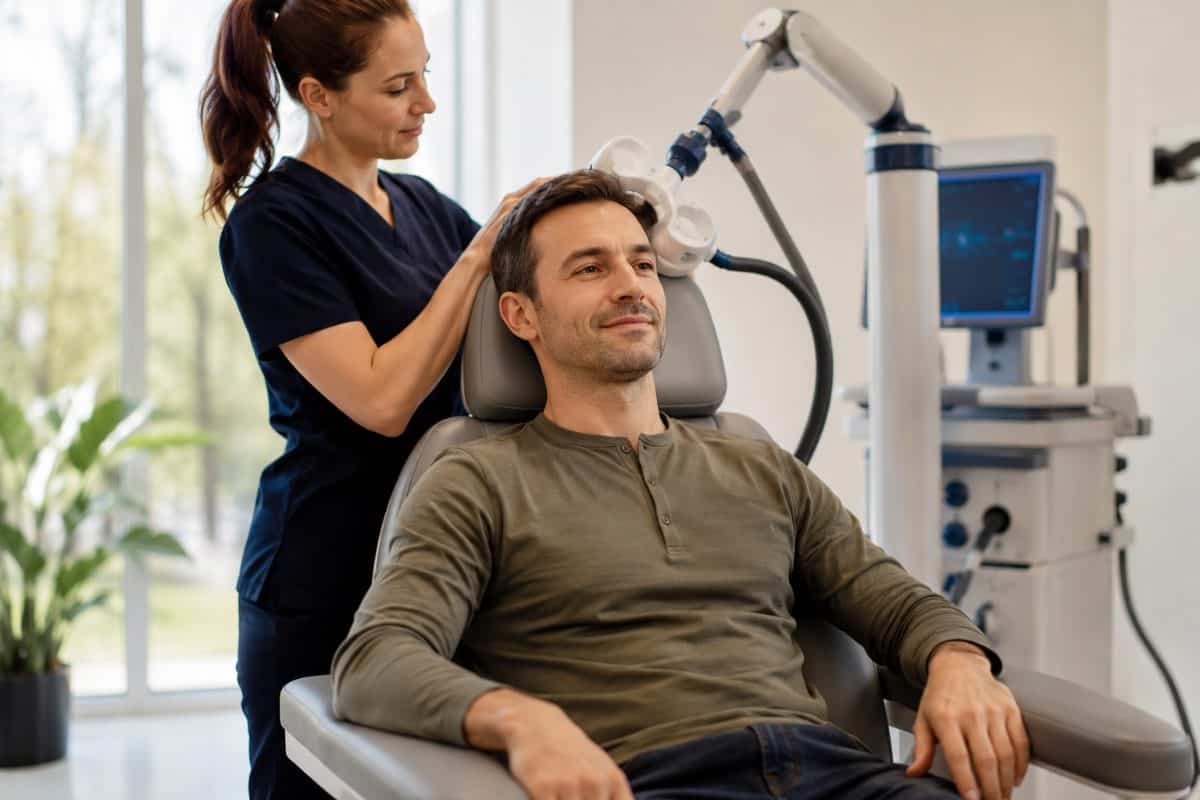
Transcranial magnetic stimulation uses focused magnetic pulses to gently stimulate specific regions of the brain involved in mood and emotional regulation. It is non-invasive, meaning there is no surgery and no anesthesia, and a person remains awake and alert during each session. TMS is FDA-cleared for major depressive disorder and for obsessive compulsive disorder. Our overview of TMS technology explains the basics in more detail.
Because anxiety so often travels alongside depression, many people who pursue TMS experience improvements in anxious symptoms as their depression is treated. Using TMS specifically and primarily for an anxiety disorder, however, is generally considered off-label, which means it falls outside the conditions for which the treatment was formally cleared. Off-label care can be appropriate, but it should be a thoughtful, individualized decision. Our article on understanding TMS for anxiety covers this foundation, and our piece comparing TMS to traditional treatments puts it in context.
What Makes It QEEG-Guided
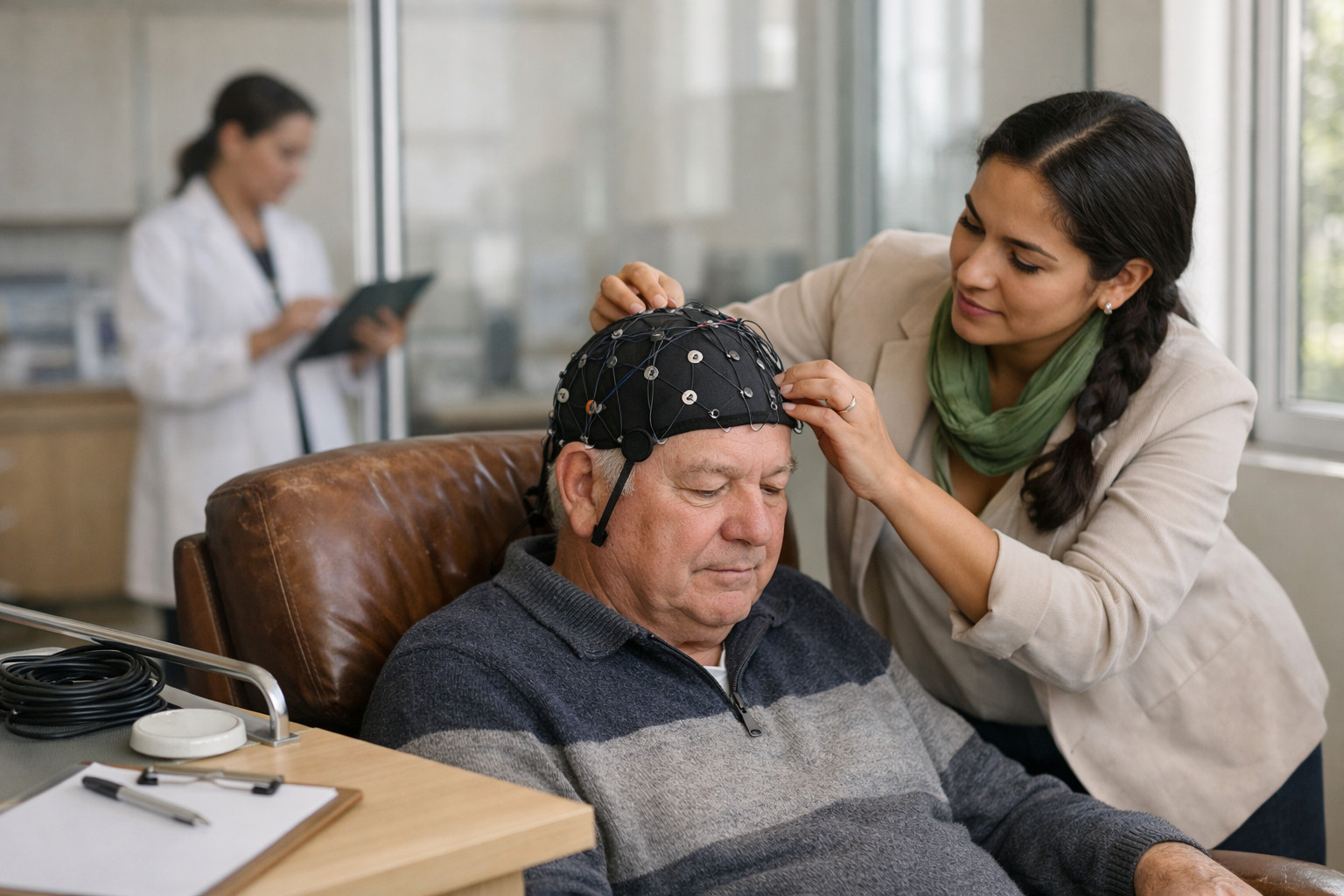
Here is where personalization enters the picture. A quantitative electroencephalogram, or QEEG, is a recording and analysis of your brain’s electrical activity. It produces a detailed map showing how different regions are communicating and where patterns may differ from typical norms. Our explainer on QEEG brain mapping walks through what the process involves and why it matters.
A standard TMS protocol applies the same target location and settings to everyone with a given diagnosis. A QEEG-guided approach starts by looking at your individual brain activity first, then uses that information to inform how treatment is planned. The reasoning is intuitive: no two brains are identical, and anxiety can involve different underlying patterns from one person to the next. By mapping before treating, the goal is to tailor care to the individual rather than applying a generic template.
This personalized philosophy is closely related to MeRT, an approach that combines QEEG analysis with magnetic stimulation. If you want to understand how the two relate, our comparison of MeRT and TMS is a helpful read.
Why TMS for Anxiety Works Better When Personalized
Anxiety is not a single, uniform condition. It can show up as constant worry, as panic, as physical tension, or as a racing mind that will not settle. Two people with the same label can have very different brain activity patterns and very different triggers. A treatment plan built around an individual map has the potential to account for that variation in a way a fixed protocol cannot.
It is important to be honest about the state of the evidence here. TMS has a strong, well-established research base for depression, and a growing one for OCD. The evidence for using brain-mapping to guide stimulation specifically for anxiety is still developing, and researchers continue to study which approaches help which patients. A responsible clinic frames QEEG-guided TMS for anxiety as a personalized, promising approach rather than a guaranteed cure, and sets expectations accordingly. You can see the range of conditions addressed on our anxiety and OCD page.
What TMS Treatment for Anxiety Involves
While every plan is individualized, a QEEG-guided journey generally follows a recognizable arc:
- Consultation and history. A clinician reviews your symptoms, history, prior treatments, and goals to determine whether the approach is appropriate.
- QEEG brain mapping. A painless recording captures your brain’s electrical activity, which is then analyzed to inform planning.
- Personalized treatment planning. The findings help guide how stimulation is approached for you specifically.
- A course of sessions. Treatment typically unfolds over a series of short, comfortable sessions during which you sit in a chair, awake, while the device delivers pulses.
- Reassessment. Progress is monitored over time, and the plan is adjusted as needed.
During sessions, most people simply relax, and some read or listen to music. The most commonly reported sensation is a tapping feeling on the scalp. Because there is no sedation, you can usually drive yourself and return to your day afterward.
Does TMS Work for Anxiety? Realistic Expectations
Hope and honesty belong together. Some people experience meaningful relief from anxiety symptoms through a personalized approach, while others see modest results, and outcomes cannot be promised in advance. TMS and QEEG-guided care work best as part of a broader plan that may include therapy, healthy routines, and in some cases medication managed by a prescriber. For practical, everyday strategies you can pair with professional care, our guide on techniques to calm your mind offers useful starting points.
Cost, time commitment, and whether insurance applies are all reasonable questions to raise during a consultation, especially since off-label use for anxiety can affect coverage. A trustworthy clinic will discuss these openly.
How a Mapped Approach Differs From Standard Protocols
To appreciate why brain mapping matters, it helps to understand how conventional TMS is usually delivered. In a standard protocol, the stimulation target is chosen based on population averages and the diagnosis, then the same location and settings are applied to nearly everyone who receives treatment for that condition. This works, and it is the basis for the strong evidence TMS has in depression. The limitation is that it treats the diagnosis rather than the individual.
A QEEG-guided approach adds a layer of information before treatment begins. By recording and analyzing your brain’s electrical rhythms, a clinician can see how your specific patterns compare to typical ranges and where activity may be over or under expressed. That picture then informs planning. The difference is similar to the contrast between a standard prescription and a tailored fitting: both can help, but the tailored version is built around the person in the chair. For anxiety in particular, where presentations vary so widely, that individualization is the central appeal. It is also why this philosophy underpins MeRT, which pairs the same mapping idea with magnetic stimulation for a range of conditions.
Who Should Consider TMS for Anxiety
QEEG-guided TMS for anxiety tends to draw interest from people who have already tried more conventional routes without the relief they hoped for. If medication has produced side effects that are hard to tolerate, or if therapy alone has not been enough, a non-drug, personalized option can feel worth exploring. It also appeals to people who simply prefer to understand what is happening in their own brain before committing to a course of treatment, since the mapping step makes the process feel less like guesswork.
That said, it is not right for everyone. A thorough screening considers your full medical history, any implanted metallic or electronic devices, seizure history, current medications, and the nature of your symptoms. Some conditions make TMS inappropriate or call for extra caution, which is exactly why an individualized evaluation comes first. Anxiety can also overlap with other conditions such as depression, OCD, or the after-effects of trauma, and a good assessment looks at the whole picture rather than a single label. You can explore the broader range of areas addressed on our conditions pages, which describe how different presentations are approached.
Combining Treatment With Everyday Support
Even the most personalized treatment plan works best when it is supported by the rest of your life. Anxiety responds to consistency, and the habits that calm the nervous system between sessions can reinforce the gains made during them. Regular sleep, movement, time outdoors, limits on stimulants like excess caffeine, and steady social connection all influence how the brain regulates stress. None of these replace professional treatment, but together they create conditions in which treatment is more likely to take hold.
Therapy is a particularly valuable companion to brain-based care. While TMS and QEEG-guided approaches work at the level of brain activity, therapy builds the skills and perspectives that help a person navigate anxious thoughts and situations. Many people find that the combination is more durable than either piece alone, because the brain changes and the coping skills support one another. When you discuss a plan with a clinician, it is reasonable to ask how treatment will fit alongside therapy and daily routines, so that everything is pulling in the same direction rather than working in isolation.
Tracking Progress Over Time
Because anxiety can fluctuate, tracking your symptoms throughout a course of treatment is genuinely useful. Simple notes on sleep, worry levels, physical tension, and how you handle stressful moments give you and your clinician concrete information rather than vague impressions. This makes it easier to see whether the personalized plan is helping, to recognize early signs of progress, and to adjust the approach if needed. In a QEEG-guided model, that ongoing feedback fits naturally with the philosophy of treating the individual, since your real-world response becomes part of how the plan evolves over the weeks ahead.
Frequently Asked Questions
Is TMS FDA-cleared for anxiety?
TMS is FDA-cleared for major depressive disorder and for OCD. Using it primarily for an anxiety disorder is generally off-label. Many people with co-occurring depression and anxiety see anxious symptoms improve as their depression is treated.
What does QEEG-guided mean?
It means your brain’s electrical activity is mapped and analyzed first, and that information is used to personalize how stimulation is planned, rather than applying an identical protocol to everyone.
Is the QEEG or the TMS painful?
QEEG is a painless recording of brain activity. During TMS, the most common sensation is a tapping on the scalp. There is no surgery and no sedation, and most people tolerate it well.
How many sessions will I need?
Treatment usually involves a series of sessions over several weeks, with the exact number tailored to the individual and adjusted based on response. Your clinician will outline a plan during your consultation.
Will TMS interfere with my medication or therapy?
TMS is generally used alongside therapy and, when appropriate, medication managed by your prescriber. It is best viewed as one part of a comprehensive plan rather than a replacement for other care.
Can results be guaranteed?
No. Responses vary from person to person, and no ethical provider can promise a specific outcome. The goal is meaningful, individualized improvement, monitored over time.
Take the Next Step
If anxiety has not responded to other approaches, a personalized, brain-mapping-informed conversation may be worth exploring. The right next step is an evaluation with a qualified clinician who can determine whether QEEG-guided care fits your situation. Learn more about our QEEG brain mapping and TMS technology, or contact us to ask questions. A consultation carries no obligation, and it is the clearest way to learn whether a personalized, brain-mapping-informed plan makes sense for your situation.
This article is for educational purposes only and is not medical advice. It is not a substitute for evaluation or treatment by a qualified healthcare provider. TMS is FDA-cleared for major depressive disorder and OCD; use for anxiety specifically is off-label. Individual results vary, and you should consult a licensed clinician before making treatment decisions.